The four accidents that end lives at home — and how to prevent them
Falls, choking, drowning in the bath, and heatstroke. 80% of accidents are prevented by preparation, not response.
Every year in Japan, roughly 44,000 people aged 65 and over die in accidents. About 80% of those happen at home. Four causes account for most of them: falls, choking, drowning in the bath, and heatstroke. In old age, the difference between a scare and a tragedy is often decided in advance — by how the home is arranged, and by whether the family knows what to do in the first two minutes.
1. The shape of accidents in later life
According to Japan’s Vital Statistics (MHLW), unintentional deaths among people 65 and over come to about 44,000 a year. The great majority are falls, choking, drowning, and heatstroke. Household accidents outnumber traffic accidents — a fact worth pausing on.
2. Fall prevention starts at the front door
- Eliminate small level changes at door thresholds and carpet edges.
- Install grab bars in stairs, bathrooms, and hallways.
- Non-slip mats in the bath, changing room, and entryway.
- Motion-sensor night lights for nighttime trips to the bathroom.
- Choose indoor slippers with a heel back. Backless slippers slide off.
- Keep up the lower-body strength work.
3. Preventing choking and airway obstruction
As swallowing weakens, choking deaths at the table climb. Take smaller bites. Sit fully upright — 90° at the hip — during meals. Sticky or dense foods like mochi, konjac, and dry bread are best avoided or cut small. Don’t rush a meal; don’t demand conversation between bites.
Learn the sequence for choking: back blows first, then abdominal thrusts (Heimlich maneuver). It’s a skill worth practicing before you need it.
4. The bath — and the deadly quiet of “heat shock”
In winter, sudden blood-pressure swings from a cold changing room into a hot bath can cause fainting — and with it, silent drowning. Roughly 5,000 people die this way in Japan each year.
The basics: warm the changing room and the bathroom before you undress. Keep bathwater at 41°C (106°F) or cooler. Stay in for no more than about 10 minutes. Drink water before and after. And — call out to someone in the household before you go in.
5. Preventing heatstroke
Older bodies feel heat less reliably, and register thirst less reliably still. Many older adults hesitate to run the air conditioner. Please — do not tough it out. Aim for a room temperature around 28°C (82°F) and humidity below 70%. Drink often; use cooling towels; step outdoors only in the early morning or evening. If your country uses a WBGT (heat index), get used to checking it.
6. When to call an ambulance
- Unresponsive; not reacting when called.
- Difficulty breathing, or no breathing at all.
- Severe chest or back pain.
- Half the face won’t move, or speech has gone slurred (signs of stroke).
- Heavy bleeding, or a large burn.
- A seizure that will not stop.
In Japan, if you’re unsure whether the situation warrants an ambulance, dial #7119 — the emergency consultation line, staffed by nurses. In other countries, check the local equivalent (e.g., NHS 111 in the UK; nurse-hotline services in many US states).
7. The basics of first response
- Check consciousness and breathing. If unresponsive, begin chest compressions (100–120 per minute).
- AED: increasingly available in stations, public buildings, and convenience stores. Anyone can use one — follow the voice prompts.
- Choking: back blows, then abdominal thrusts.
- Burns: cool immediately under running water for at least 15 minutes.
- After a fall: if the head or neck struck hard, do not move the person — call emergency services.
8. The emergency information sheet on the fridge
Many Japanese municipalities distribute an “Emergency Medical Information Kit” — a small tube containing a slip with the person’s name, date of birth, medical history, current medications, family doctor, and next-of-kin contacts. It lives in the refrigerator, and gets handed to the paramedics on arrival.
The equivalent, in most countries, is any one-page summary of the same facts, taped somewhere obvious. If the person can’t speak, the paper does.
References
- MHLW, Vital Statistics of Japan — annual mortality data for accidents in older adults.
- Japan Fire and Disaster Management Agency, guidance on emergency response and #7119 consultation line.
📖 New book by the author of this site
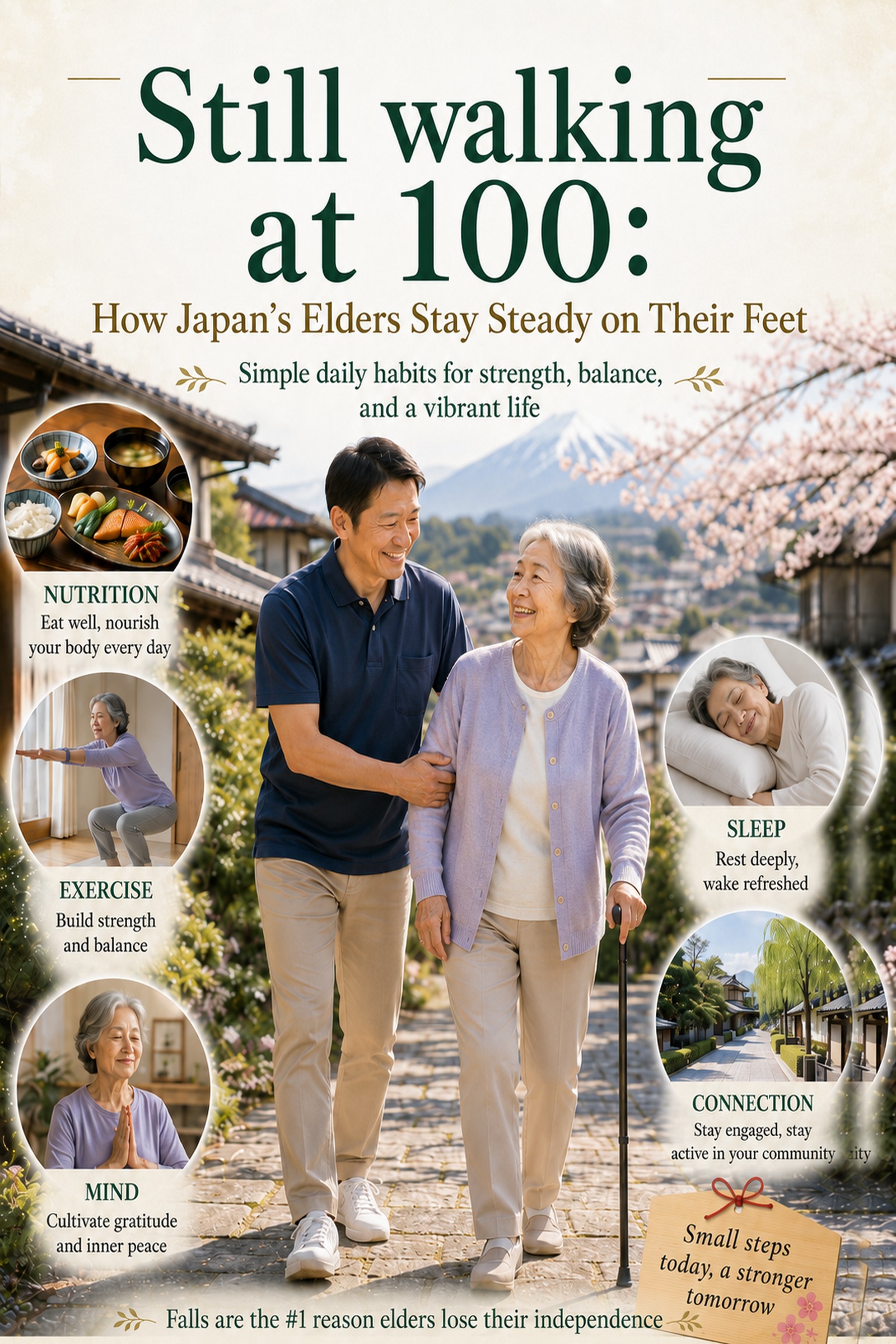
Still Walking at 100: How Japan’s Elders Stay Steady on Their Feet
Kindle $3.99 · free with Kindle Unlimited
Learn more
コメントを残す