Kaigo yobou — how Japan prevents the slide into dependency
The three pillars — movement, nutrition, social participation — and Japan’s community system that carries them out at scale.
“Care prevention” — kaigo yobou in Japanese — is not only about preventing the need for care before it arrives. It also means slowing or reversing decline in people who already need support. It works best when the person, the family, the neighborhood, and professionals move together.
1. Three stages of prevention
- Primary prevention — help healthy older adults maintain habits that keep them out of frailty.
- Secondary prevention — catch early signs of frailty and intervene before care is needed.
- Tertiary prevention — for those already needing support, preserve independence and, where possible, restore function.
2. Frailty and sarcopenia
Frailty is the halfway house between health and dependence. It has three dimensions: physical (strength, walking speed), mental (cognition, mood), and social (isolation). Sarcopenia — age-related loss of muscle mass and strength — is the physical engine of frailty.
3. The three pillars of prevention
- Movement — 150 minutes of aerobic activity a week, plus two strength sessions and some flexibility work. “Move while you still can.”
- Nutrition — 1.0–1.2 g of protein per kilogram of body weight per day. Avoid undernourishment. A traditional Japanese meal plus dairy is close to ideal.
- Social participation — gathering places, volunteering, hobby groups. At least one face-to-face contact a week.
4. Japan’s community-based support program
Since 2017, Japan’s municipalities have operated a “Comprehensive Support Program for Long-Term Care Prevention and Everyday Life” — locally-tailored services for people at the earliest levels of care need. Home visits, day-service programs, resident-led mini day centers, meal delivery, and check-in visits are all part of the mix.
5. The “gathering places” — kayoi no ba
Local community centers, salons, and neighborhood halls host regular gatherings. Gentle exercise, tea, and hobbies keep social ties alive. Typical fees are around 100 yen for a session, once a week — and everyone is welcome. The municipal newsletter and the local Community General Support Center know where they are.
6. What you can do at home
- Radio calisthenics — Japan’s 3-minute-20-second broadcast, daily (or any other quick guided routine).
- Sit-to-stand from a chair, 10 reps × 3 sets.
- Heel raises — 20 reps (calves and balance).
- Oral exercises: pa-ta-ka-ra — repeated for swallowing muscle maintenance.
- Reading the newspaper aloud; brain training puzzles.
7. Catching decline early
Once a year, run through Japan’s Basic Checklist — a 25-item screen that flags early frailty. Some items you can measure yourself: walking speed, grip strength, unexplained weight loss, persistent fatigue. Community Support Centers offer the assessment free of charge.
References
- MHLW, Long-Term Care Insurance system and the Comprehensive Support Program for Long-Term Care Prevention (2017– ).
- MHLW, Basic Checklist (25-item frailty screening tool).
- WHO, Physical activity guidelines for older adults.
📖 New book by the author of this site
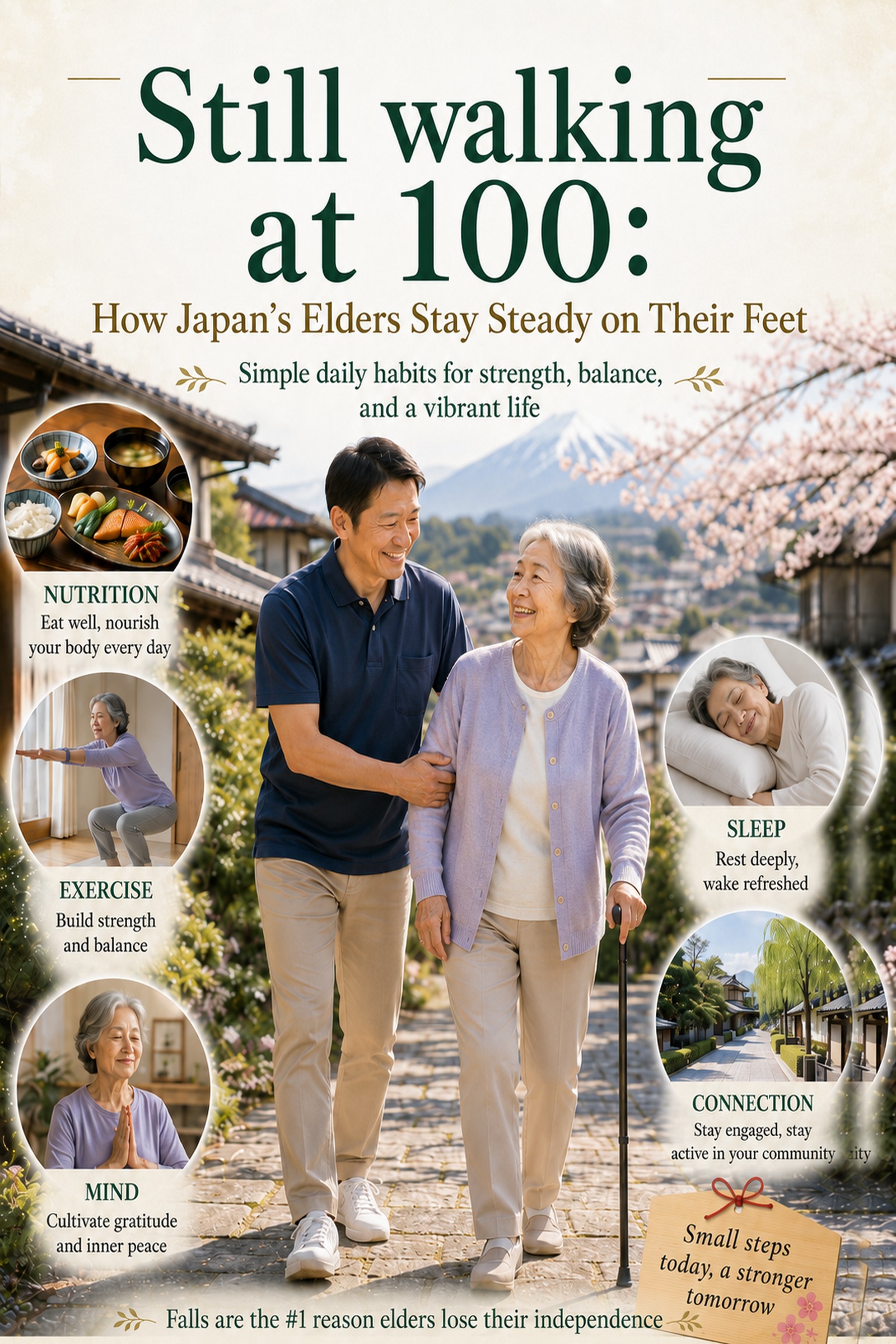
Still Walking at 100: How Japan’s Elders Stay Steady on Their Feet
Kindle $3.99 · free with Kindle Unlimited
Learn more
コメントを残す