The route you’ve walked for thirty years
Black ice, freeze-thaw, and the winter version of you. Why the sidewalk is worse than it looks, why the body is slower in cold, and the small habits that keep the season from ending in a hip replacement.
Nobody plans to fall.
The people I see in rehab after a winter fracture almost always begin their story the same way — with some version of “I’ve walked that stretch of sidewalk for thirty years.” A patch of ice in the shape of a puddle. A hallway rug they’d stopped seeing years ago. A dark stair. The familiar route is where confidence lives, and confidence is where the fall is waiting.
Winter makes all of this worse in three ways at once. The ground gets slick. The body gets slower. And the sunlight vanishes early, taking a real amount of vitamin D with it. So you get the same person, less able to catch themselves, walking on a surface that gives them less to catch. This piece is about how to tilt those odds back.
Why the ground is worse than it looks
The worst winter surface is what road engineers call black ice — a thin film of ice on pavement that looks like nothing more than a wet spot. It’s easy to walk right onto. Early mornings and late evenings, sidewalks in shade, and the painted stripes at crosswalks are the classic offenders.
The other trap is the freeze-thaw cycle. A warmer afternoon melts the top layer of snow. That water refreezes overnight into something slicker than the original snow. “It’s warmer today, I’ll be fine” is the sentence that gets a lot of people to the emergency room.
Why the body is worse in the cold
Muscles tighten in cold weather. Ankles and knees lose a fraction of their range of motion, which is exactly what you need if you trip and want to catch yourself in the next quarter second. Heavy layers restrict stride and lift. Blood pressure spikes when you step out of a cold entryway into a warm room, or vice versa, and dizziness is one of the underrated causes of winter falls. Short days mean less UV on the skin, and vitamin D drops. Vitamin D is what keeps calcium moving into bone. Bone that is short on calcium breaks with less impact.
Where things break
Three places, mainly. The wrist, from putting a hand out. The spine, from a jarring landing. And the hip — the neck of the femur — from a sideways fall. Hip fractures are the ones that scare me. They almost always mean surgery. Recovery is slow. A meaningful minority of people never fully return to how they walked before. Preventing the fall in the first place is not the polite thing to do. It’s the actual medicine.
Five habits, for the sidewalk
- Wear boots or shoes with an actual winter tread. Flat, smooth soles are what put people down. If a proper winter boot is impractical, the strap-on rubber spikes that go over normal shoes are worth every yen.
- Shorten your stride. Keep your weight over the middle of your body, not out in front of you. The “penguin walk” they teach in Nordic countries is not a joke.
- Keep your hands out of your pockets. If you can’t get an arm out, you land on your face. Wear gloves. Put whatever you’re carrying in a backpack.
- Use a cane, if there’s any reason to. There is no age at which a cane arrives too early. In winter, the rubber tip that comes standard should be swapped for the metal-spike or serrated winter tip.
- Slow down at the transitions. The lip of a curb. The mouth of a driveway. The lobby of a building where boots have tracked in water. Most falls happen in the first three seconds after a change of surface.
Five things to check inside the house
Roughly half of falls happen at home. In our familiar places, the guard is down. Some quick fixes:
- Dim hallway? Put in a motion-sensor floor light. Stairs need a handrail on both sides if possible, and non-slip tape on the leading edges.
- Bathroom is the wet room. Non-slip mat inside and out of the tub, a grab bar for the step-over, and pre-warming the changing room and bathroom before you undress. The temperature swing between rooms is what causes bath fainting.
- Toilet at night. Sleepy legs plus a dark hallway is one of the worst combinations. Add a motion light, and a grab bar by the seat.
- The Japanese agari-kamachi — the entryway step. Mark the edge with bright tape. Keep a low bench there so people can sit to put shoes on.
- Rugs and mats that slide, or whose edges have curled. Non-slip backing, or tape them down. Anything to keep the corner of a toe from catching.
Two mistakes to avoid
The first is “I’m still fine.” Balance, ankle strength, and reaction time all drop slowly enough that you don’t feel them going. The story you tell yourself about your body lags the body by a year or two. That gap is where the fall happens.
The second is the mirror image. After a scary fall, some people withdraw completely — stop leaving the house, stop moving. The muscles they need most then wither the fastest, and the next fall comes sooner. Rehab, at whatever level a physician allows, is what breaks the loop. Movement is the medicine, even, and especially, after a fall.
A winter without a fracture is not luck. It’s a sum of small decisions — the boots, the light in the hallway, the cane you finally accepted. Make a few of those decisions this weekend, before the first freeze.
References
- MHLW, National Vital Statistics — falls and fractures in older adults, seasonal patterns.
- Holick MF. Vitamin D deficiency. NEJM, 2007;357:266–281.
- Sherrington C et al. Exercise for preventing falls in older people living in the community. Cochrane, 2019.
- Japan Osteoporosis Society, prevention guidelines.
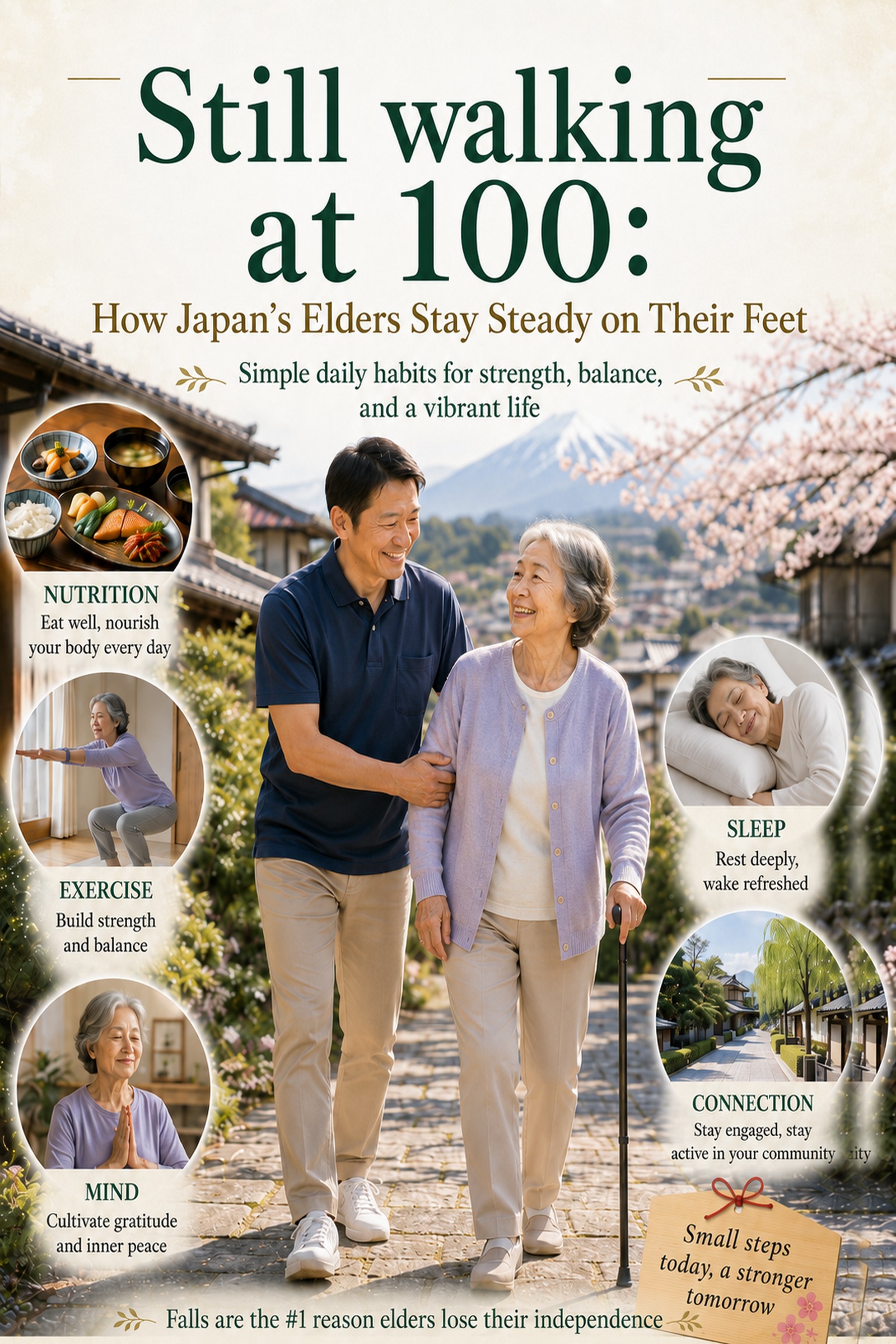
📖 New book by the author of this site
Still Walking at 100: How Japan’s Elders Stay Steady on Their Feet
Kindle $3.99 · free with Kindle Unlimited
Learn more
コメントを残す