The skeleton is a construction site
Dairy, small fish, soy, dark greens, mushrooms. Calcium is one material. Vitamin D lets it in. Vitamin K settles it into bone. And the one thing food alone cannot do.
Roughly 12.8 million people in Japan carry a diagnosis of osteoporosis. Most of them are women past menopause, and a large minority are men in their seventies and beyond. The condition itself doesn’t hurt, which is part of its danger. You don’t feel your bones getting thinner. You feel it the day you fall in the kitchen and something snaps.
The three fractures we worry about most are the wrist, the vertebrae, and the neck of the femur. The hip fracture is the one that changes lives. Recovery is measured in months. Some people never regain their previous mobility. This is the argument for taking the food half of this seriously long before there’s a diagnosis on paper.
Bone is a construction site, not a monument
The idea that your skeleton was built once, in your twenties, and just sits there for the rest of your life is wrong. Bone gets torn down and rebuilt continuously by two crews. The tear-down crew is called osteoclasts. The rebuild crew is called osteoblasts. In a healthy young adult, they roughly match each other. With age, with the drop in estrogen at menopause, with too little of the right nutrients, the tear-down crew starts winning. Density falls.
What you eat matters because the rebuild crew needs materials. Calcium is one of those materials. It is not the only one. Anybody selling you calcium alone is telling half the story.
The rankings, more or less
Dairy — the workhorse
Milk, yogurt, cheese, cottage cheese. Absorbable calcium in useful density. A glass of milk delivers roughly 220 mg of calcium; a small yogurt around 130. The Japanese adult daily target sits between 700 and 800 mg. Dairy makes hitting that number easier than any other single approach. If lactose is a problem, yogurt and hard cheeses are usually tolerated even by people who react to milk itself.
Small fish and seafood
Sardines eaten whole. Salmon. Shirasu — the tiny whitebait that a lot of Japanese households sprinkle over rice for breakfast. Eating the bones is the point. And the fish itself brings vitamin D, which is the key that lets calcium actually get absorbed in the gut. Vitamin D deficiency defeats even a high-calcium diet. A salmon fillet delivers three times the daily target for vitamin D by itself.
Soy foods
Tofu, natto, thick fried tofu (atsuage). Beyond the calcium — atsuage is surprisingly calcium-dense — soybeans carry vitamin K, which activates the protein osteocalcin, the thing that binds calcium into the bone matrix. Natto in particular is close to the top of the vitamin K rankings. One pack a day, if you can stand it, is doing quiet work.
Dark leafy greens
Komatsuna is often called the vegetable king of calcium in Japan, and the number holds up: 100 grams delivers about 170 mg, which rivals milk. Broccoli and spinach bring magnesium, which cooperates with calcium in the bone-building process. If you focus only on calcium and neglect magnesium, the balance actually gets worse, not better.
Mushrooms
One of the few plant foods that contain meaningful vitamin D — especially dried shiitake, where the drying-in-sunlight step multiplies the vitamin D content substantially. Maitake also carries it. Low calorie, high fiber, and easy to add to soup.
Three habits that quietly steal from your skeleton
The first is thinking calcium is the whole answer. It isn’t. Vitamin D lets it in. Vitamin K settles it into bone. Magnesium supports the structure. Missing any of these, the strategy underperforms.
The second is excess salt, alcohol, and caffeine. High sodium intake pulls calcium out with urine. Heavy drinking suppresses bone formation. And enough caffeine — say four or more cups of coffee a day — accelerates calcium loss. Two or three cups is where most people are still fine.
The third is being afraid of the sun. Vitamin D is made in skin exposed to sunlight. Fifteen to thirty minutes on the arms and face, a few times a week, is enough for most people. In the Japanese winter, or for people who can’t get outside easily, dietary vitamin D and supplements become the alternative — worth discussing with your doctor.
The one thing food alone can’t do
Load. Bone responds to the mechanical stress of weight-bearing movement. A person who walks, gardens, and climbs stairs builds and holds more bone than a person who sits still, even if their nutrition is identical. The food is one lever. Movement is the other. Both, or the strategy misses.
Nothing here is exotic. Milk, small fish, tofu, greens, mushrooms. Salt down, coffee moderate, a walk in the sun. Do these for enough years and the fracture that everyone else assumed was inevitable becomes something else — a fracture that didn’t happen to you.
References
- Japan Osteoporosis Society. Guidelines for Prevention and Treatment of Osteoporosis, 2015 edition (with subsequent updates).
- Ross AC et al. Dietary Reference Intakes for Calcium and Vitamin D. Institute of Medicine, 2011.
- Weaver CM et al. The National Osteoporosis Foundation’s position statement on peak bone mass development and lifestyle factors. Osteoporos Int, 2016.
- Kaneki M et al. Japanese fermented soybean food as the major determinant of the large geographic difference in circulating levels of vitamin K2. Nutrition, 2001.
📖 New book by the author of this site
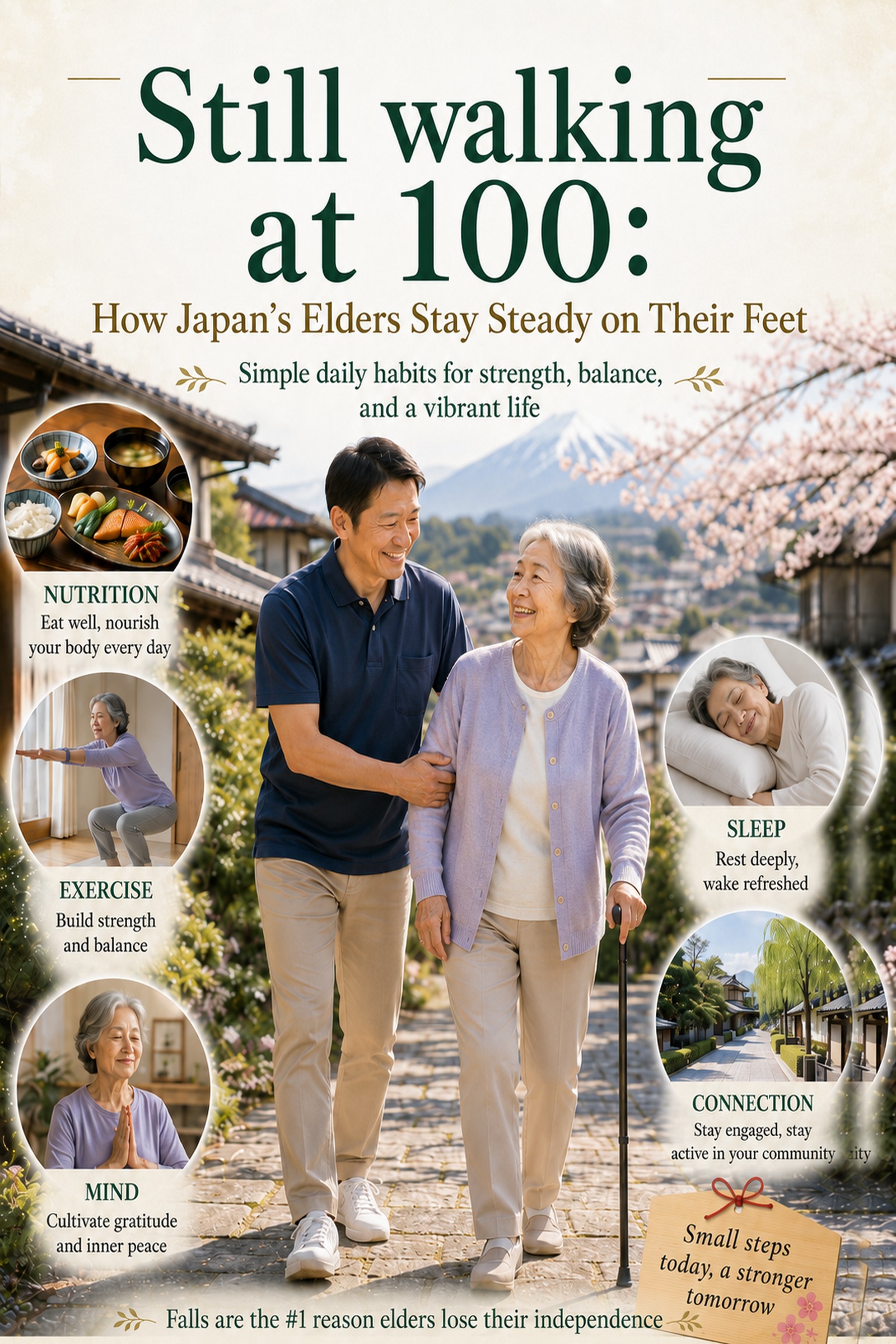
Still Walking at 100: How Japan’s Elders Stay Steady on Their Feet
Kindle $3.99 · free with Kindle Unlimited
Learn more
コメントを残す