The persimmons haven’t come in yet
The research on ikigai, the Venn diagram that isn’t Japanese, and why the daily-life version of purpose seems to protect the body better than the grand kind.
The word gets thrown around a lot now. IKIGAI, in English publishing, in TED talks, on Instagram over pictures of Okinawan grandmothers with impossibly good skin. Half the time it comes with a Venn diagram — four overlapping circles labeled “what you love, what you’re good at, what the world needs, what you can be paid for,” and the promise that the sweet spot in the middle is your reason for living.
That diagram isn’t Japanese. It was made up around 2014, by a Spanish blogger, using the Japanese word as decoration. The actual Japanese concept is looser and, I would argue, better. Ikigai means, roughly, the thing that makes you glad to wake up. It does not have to make money. It does not have to be world-changing. It can be the tomato plants on the balcony. It can be Tuesday choir practice. It can be one grandchild.
What the research actually says
Toshimasa Sone and colleagues at Tohoku University followed roughly 43,000 Japanese adults for seven years and found that those who reported having ikigai had lower all-cause mortality — the effect was on the order of 15%, adjusted for age, sex, and health status at baseline. Subsequent Japanese cohort work has broadly replicated the finding, with reductions of 15 to 30% across various endpoints.
The mechanism isn’t mysterious. Purpose correlates with lower rates of depression. Lower depression correlates with better sleep, better appetite, and more physical activity. Better activity means better cardiometabolic health. It’s a chain, not a spell. But the chain is real.
Some things it isn’t
It isn’t a job. Retirement doesn’t extinguish it and doesn’t require it. Plenty of people are miserable at their jobs their whole working lives and only discover a real reason to get up in the morning at seventy-two.
It isn’t a mountain-summit big goal. Life-purpose research increasingly suggests the most protective forms are what psychologists call “daily-life meaning” — small, repeatable, textured — rather than grand life narratives. The garden matters. The choir matters. Watching one grandchild grow up matters.
It isn’t singular. Most people who have made it to a hundred in good shape have three or four small ikigai, not one big one. If one gets taken away by illness or bereavement, the others hold.
If you don’t currently have one
This is where I want to be careful. Some articles on this topic sound like homework, and homework is the wrong energy. Nobody discovers their reason for living by filling in a worksheet. What you can do is create the conditions.
Notice what you used to enjoy before adult responsibilities crowded it out. The instrument you played in high school. The kind of book you disappeared into at twelve. The Saturday morning you looked forward to. These are hints. Follow one for an afternoon.
Notice what other people thank you for. That’s usually a hint about what you’re good at, and where being useful might live for you now.
Try things you’re bad at. This is counterintuitive advice for older adults, who often want to protect the dignity of their known competence. But novelty is what stimulates the brain, and the mild embarrassment of being a beginner is a small price for the reward of finding something you didn’t know you’d love.
A note on the difference between purpose and pressure
Purpose is what pulls you forward. Pressure is what pushes you around. If your reason for living turns out to feel like an obligation — a duty, a to-do list, something you can fail at — then it isn’t quite ikigai yet. It’s a task.
What we’re after is the thing you’d be a little sad to miss, tomorrow. Not the thing you feel guilty for skipping. The gardening you look forward to, not the exercise you resent. That distinction, small as it sounds, is what makes the difference between a sustainable source of meaning and another item on the calendar.
One of the residents at our center used to say, half joking: “I don’t know what my reason for living is. But I know I want to see whether the persimmons come in this year.” That is entirely enough.
References
- Sone T et al. Sense of Life Worth Living (Ikigai) and Mortality in Japan: Ohsaki Study. Psychosom Med, 2008;70(6):709–715.
- Cohen R et al. Purpose in Life and Its Relationship to All-Cause Mortality and Cardiovascular Events: A Meta-Analysis. Psychosom Med, 2016;78(2):122–133.
- Boyle PA et al. Effect of a purpose in life on risk of incident Alzheimer disease and mild cognitive impairment in community-dwelling older persons. Arch Gen Psychiatry, 2010;67(3):304–310.
📖 New book by the author of this site
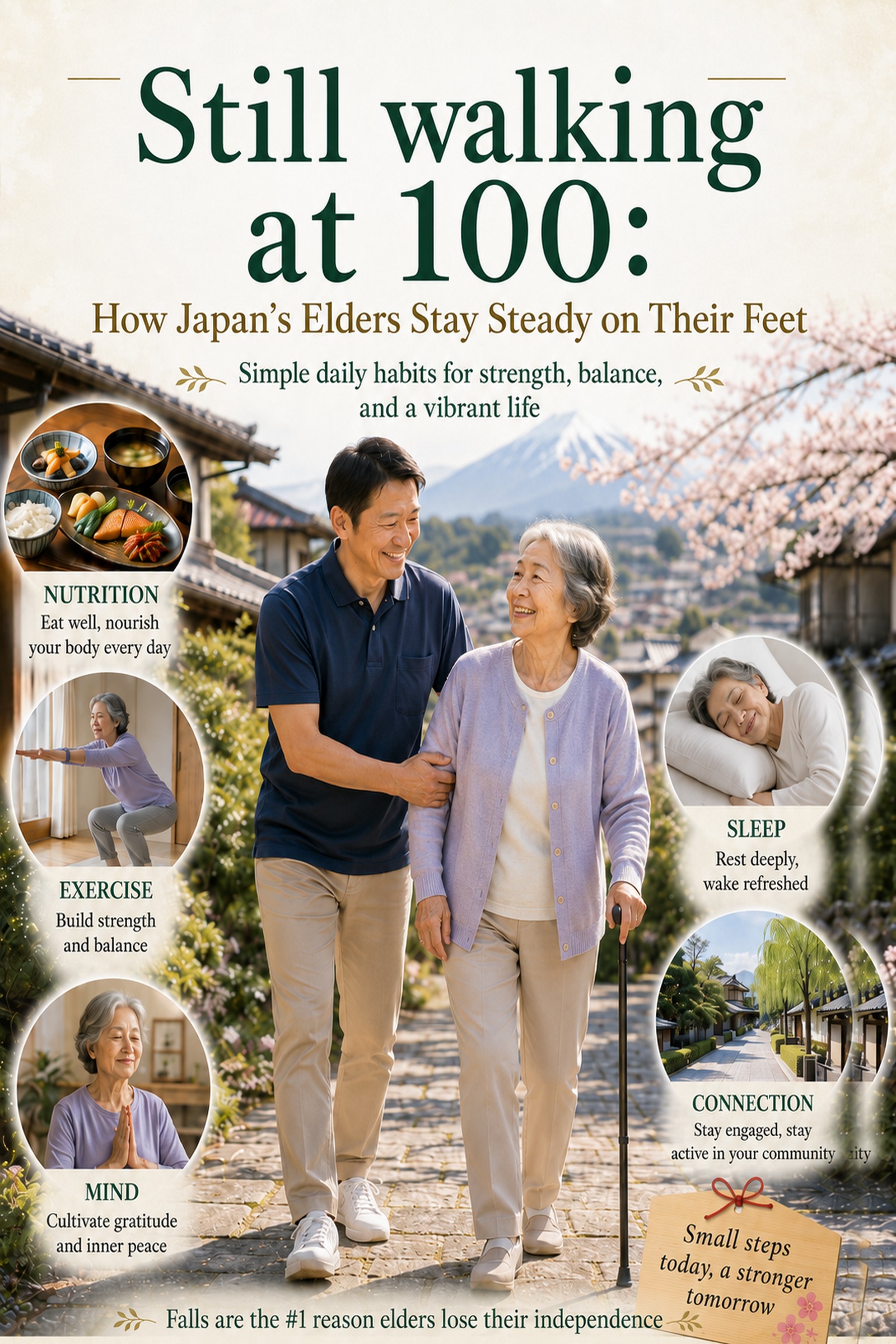
Still Walking at 100: How Japan’s Elders Stay Steady on Their Feet
Kindle $3.99 · free with Kindle Unlimited
Learn more
コメントを残す