Tai chi, yoga, or Pilates — a short decision tree
Falls, joints, stress, sleep, and how to match your actual weak spot to the practice’s actual strong point. Plus what all three have in common that a treadmill doesn’t.
Somebody asks me this at least once a month. “Which one should I do — tai chi, yoga, or Pilates?” Usually it’s a person in their sixties or seventies who has finally decided to move their body more, and now finds themselves staring at three different community-center flyers with no idea how to pick.
The honest answer is that all three are excellent, and the best one is the one you’ll show up to on Tuesday. That said, they do differ in what they’re aimed at, and matching your body’s actual weak spot to the practice’s actual strong point is worth thinking about.
Where each comes from
Tai chi began as a Chinese martial art, and the health form we do now was extracted from it in the 20th century. The signature is slow, continuous movement, weight shifting from one leg to the other. People call it “moving meditation,” which is the best two-word description I’ve heard.
Yoga is Indian, more than five thousand years old in some form. It combines postures — asanas — with breath work and, in many traditions, meditation. It ranges wildly from gentle restorative yoga to vigorous flowing styles. For older adults, the gentle end is what matters.
Pilates was invented in the early twentieth century by Joseph Pilates, originally as rehabilitation for injured dancers and, before that, for wounded soldiers during the First World War. It focuses on the deep core muscles — the abdominal, back, and pelvic-floor stabilizers — and works them through controlled, precise movement.
What each one is best at, if I had to pick
Fall prevention
Tai chi wins this one clearly. The whole practice trains you to shift weight fluidly from one leg to the other, which is exactly the motor pattern that catches you when you start to trip. The WHO specifically recommends it for older adults, and the meta-analyses of fall prevention trials keep coming back with roughly 20 to 25% reductions in falls among tai chi practitioners. That is a real number.
Yoga is second. The balance postures help, and gentle senior classes are designed to keep the practice safe. Pilates helps indirectly — a stronger core means better postural stability, which reduces fall risk, but it isn’t training balance the way tai chi is.
Back and knee pain
Pilates wins. It was literally invented as rehabilitation. The precise, low-load work strengthens the muscles that stabilize the spine and hips without stressing the joints. If you’re carrying chronic low-back pain, this is the one to try first.
Yoga is usable for back pain, but only if the class is well-taught and the props (blocks, blankets) are used generously. A vigorous power-yoga class is a fast way to hurt yourself if the back is already unhappy. Tai chi is knee-friendly if the form is correct, but the sustained slightly-bent-knee posture can bother people whose knees are already sore.
The mind — stress, sleep, cognition
Tai chi and yoga are close to tied. Both build in breath work and present-focus, and both have decent trial data showing improvements in sleep quality, anxiety, and — over months to years — cognitive maintenance. Yoga probably has the edge for anxiety and sleep, because the breath work is more central. Tai chi has the edge for cognition, in the specific sense that the motor learning and sequence memorization keep the brain working.
Pilates has real mental benefits too, but they’re a side effect of the concentration required, not the point of the practice.
Ease of starting
Tai chi is the easiest to try — many Japanese parks have a group that meets before eight in the morning, free, drop-ins welcome. You just show up and follow along. The form takes years to master, but you’ll get benefit from the first month.
Yoga is easy to try in class form but has the widest quality range. Look for a class specifically for older beginners, and expect the teacher to modify poses for you generously.
Pilates almost always requires an initial period of individual instruction to learn the movements safely. Studios exist in most cities. The mat version can be done at home once you’ve learned it. It’s the most expensive of the three, on average.
A short decision tree, for the impatient
- Worried mainly about falls, or lost your balance a few times lately? Start with tai chi.
- Back or knee pain running your life? Start with Pilates.
- Poor sleep, high stress, or general body stiffness? Start with a gentle yoga class.
- Not sure? Try tai chi. It’s cheap, it’s outdoors, it’s low risk, and it’s the most consistently recommended by geriatric medicine.
The thing they have in common
All three ask you to move slowly, breathe consciously, and pay attention. That combination, done for an hour a few times a week over years, produces effects that shorter and more intense forms of exercise don’t produce. Not instead of walking or strength training — but in addition to them.
Whichever one you pick, the actual predictor of benefit is showing up. Twice a week for six months, at bare minimum, before you make a judgment about whether it’s for you. The first few weeks of anything unfamiliar feel awkward. That is not information about whether the practice suits you. That is information about being a beginner.
References
- Sherrington C et al. Exercise for preventing falls in older people living in the community. Cochrane Database Syst Rev, 2019.
- Wayne PM et al. Effect of Tai Chi on cognitive performance in older adults: systematic review and meta-analysis. J Am Geriatr Soc, 2014;62:25–39.
- Cramer H et al. Yoga for chronic low back pain: a meta-analysis. Clin J Pain, 2013.
- Wells C et al. The effectiveness of Pilates exercise in people with chronic low back pain: a systematic review. PLoS One, 2014.
📖 New book by the author of this site
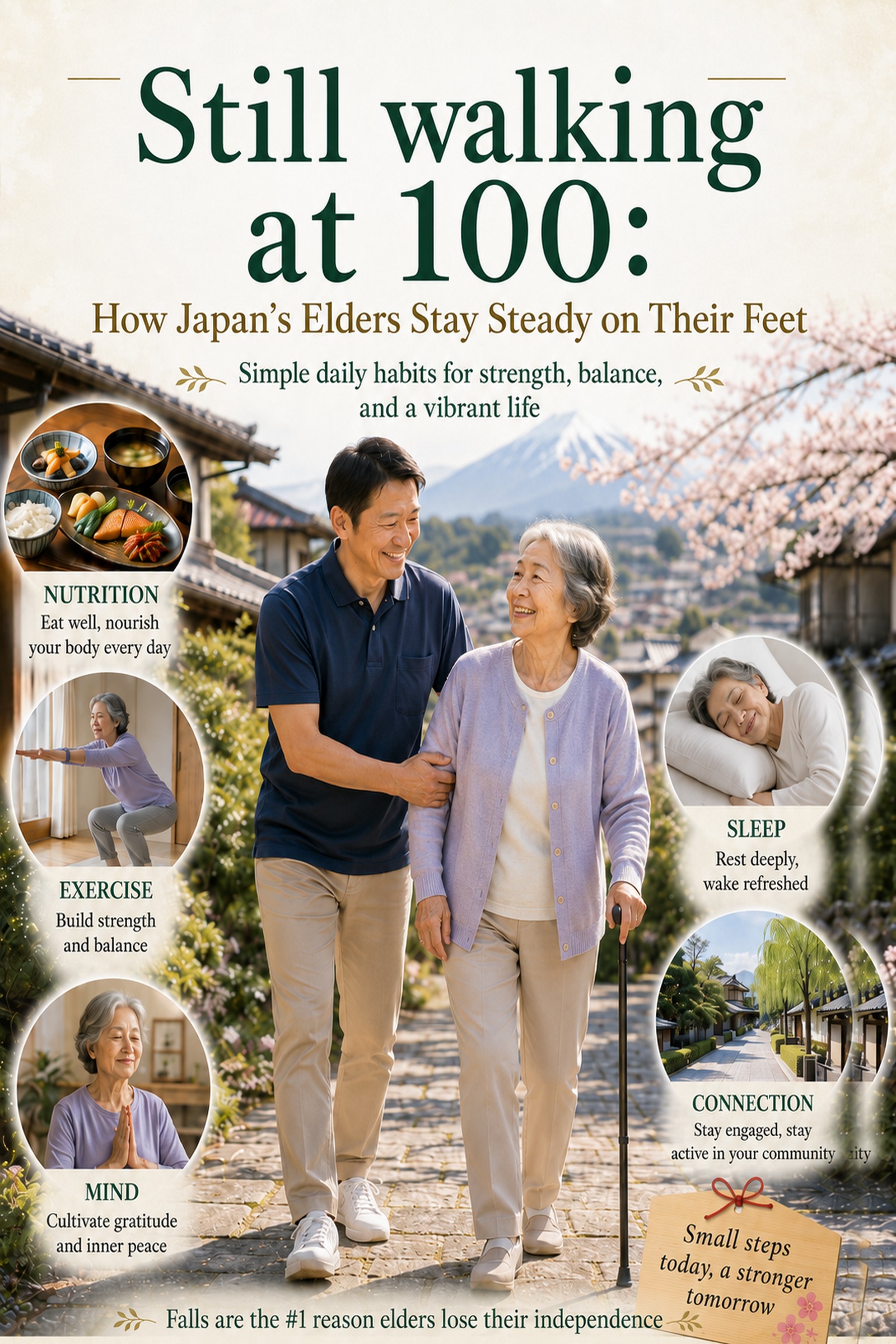
Still Walking at 100: How Japan’s Elders Stay Steady on Their Feet
Kindle $3.99 · free with Kindle Unlimited
Learn more
コメントを残す