Ten minutes, five movements, most days
Yuru kintore — the specific low-intensity strength approach that actually works past seventy. Five exercises, why each one matters, and the five mistakes that make people quit.
“Strength training” is a phrase that puts a lot of older adults off, because it summons images of loaded barbells and grunting young men in mirrored gyms. That is not what we’re talking about here.
What we’re talking about is the specific piece of geriatric medicine that has been reshaping how thoughtful clinics work with people in their seventies and eighties. Muscle can be built at any age. The trials keep confirming this. But the way you get there past seventy is not by imitating the way twenty-year-olds train. It’s by doing what the Japanese call yuru kintore — gentle strength training — consistently, at low intensity, for ten minutes at a time, most days of the week.
This is what actually works, based on what I’ve seen at our center and on the trials that back the approach.
Why the seventies and eighties are the exact age this matters most
Muscle mass falls about 1 to 2 percent per year in your sixties, and the pace accelerates from there. By eighty, the average person has lost 30 to 40 percent of the muscle they had at thirty. This is called sarcopenia, and it drives most of what people casually attribute to “aging” — the slowness, the shortened stride, the fatigue after a flight of stairs.
The consequences compound. Weaker legs mean higher fall risk, and a fall at eighty is not what a fall at forty was. Weaker muscles mean lower basal metabolic rate, so weight creeps up on the same amount of food. Less muscle means less glucose disposal capacity, so blood sugar drifts higher. And once movement gets tiring, activity drops, and the spiral tightens.
What breaks the spiral is stimulus. Muscles, at any age, respond to being asked to work. Not asked at gym-bro intensity. Just asked, regularly.
Five gentle movements, ten minutes a day
These are the ones I recommend to people starting out. They cover the muscle groups that matter most for staying on your feet, without needing any equipment or floor exercises.
Chair stands
Sit in a firm chair. Stand up slowly, without using your hands if possible. Sit down slowly, controlled. That’s one repetition. Do ten. Rest. Do another ten.
This is the single most predictive test of leg function in gerontology. It’s also the most straightforward exercise for building the muscles you need to keep getting out of chairs and off toilets independently. If ten in a row is hard, do five. If five is hard, use your hands lightly and do what you can. Progress happens on its own.
Heel raises
Stand behind a chair or at a countertop, holding on for balance. Rise slowly onto your toes, hold for a second, lower slowly. Ten to twenty repetitions.
The calf muscles are what pump blood back up the legs against gravity. They’re also central to the push-off phase of walking. Training them improves circulation, walking speed, and standing balance all at once.
Wall push-ups
Stand about an arm’s length from a wall. Place both hands on the wall at shoulder height. Lean in until your nose is close to the wall, then push away. Ten repetitions.
The upper body matters, especially in the context of falls. If you go down, being able to catch yourself with your arms can be the difference between a scrape and a broken hip. Wall push-ups build the specific pressing strength that catches you.
Abdominal draw-ins
Sit in a chair. Pull your belly in toward your spine gently, and hold for five to ten seconds while breathing normally. Release. Repeat ten times.
This trains the deep core stabilizers — the transversus abdominis and related muscles — that keep the spine steady during ordinary movement. Strong deep-core muscles are one of the more effective prevention strategies against lower-back pain in older adults.
Toe raises
Sit in a chair with your feet flat on the floor. Keeping your heels down, lift your toes and the fronts of your feet as high as you can. Lower. Repeat ten times per foot.
This trains the tibialis anterior — the shin muscle — which is what lifts the front of your foot when you walk. Weakness in this muscle produces the shuffling, foot-dragging gait that leads to catching a toe on rugs and thresholds. Almost every fall in someone with a mild shuffle involves this muscle group.
The frequency
Aim for most days. Five days a week is the target. Rest days give the muscles time to rebuild. If you did the five movements above, at the numbers listed, five days a week, for eight weeks, you would see meaningful improvements in chair-stand time, gait speed, and single-leg balance. The trials on this are robust.
Progression
Once ten repetitions of each starts to feel easy, add two more. When those get easy, add two more. When you’re at 20 to 30 repetitions of each and it’s still easy, add a second daily session or start adding a small amount of resistance — light dumbbells (500g to 1 kg), or ankle weights.
What you don’t need to do is get dramatic. Small increments, sustained over months, produce the changes you want. Big pushes followed by injury and quitting are the failure mode.
Five common mistakes
Working through pain
“Slightly hard” is fine and desirable. Sharp pain is not, ever. If a movement produces pain that isn’t just the mild burn of muscles working, stop. Muscle soreness the next day is normal. Joint swelling or prolonged pain isn’t.
Starting at too high a volume
The mistake older adults make most often is deciding to “really commit” and doing 30 chair stands the first day. The next day everything hurts, and the routine dies. Start low. Add a little.
Skipping the warm-up
Two minutes of walking in place, arm circles, and shoulder rolls before starting. This is genuinely non-optional for older joints. Cold tissue tears more easily.
Holding the breath
People instinctively hold their breath during exertion. Don’t. Exhale during the effort phase, inhale during the release. This keeps blood pressure from spiking.
Doing this alone forever
A first session with a physical therapist to check your form, if your insurance or care plan allows, is worth its weight. So is a community exercise class. Doing this in the presence of others tends to increase both frequency and duration of the habit.
What ten minutes a day actually buys you
If you sustained the routine above for a year, based on published trial data, you could expect:
- Walking speed improved by 10 to 20 percent.
- Chair-stand time (the standard clinical test) improved by 20 to 40 percent.
- Measurable reduction in fall risk.
- Better balance in standing tests.
- Modest improvements in metabolic markers — blood sugar, blood pressure.
- Better mood, better sleep, better appetite.
None of these are earth-shaking single-number improvements. All of them, cumulatively, are the difference between a healthspan that ends at 78 and one that runs to 88 with independence intact.
Ten minutes. Five movements. Most days. The commitment is small, and the return is much larger than most seventy-year-olds have been led to expect. Start today, at whatever level fits your body today, and adjust as you go.
References
- Fiatarone MA et al. High-intensity strength training in nonagenarians. JAMA, 1990.
- Fielding RA et al. American College of Sports Medicine position stand: Progression models in resistance training for older adults. Med Sci Sports Exerc, 2011.
- Bohannon RW. Sit-to-stand test for measuring performance of lower extremity muscles. Percept Mot Skills, 1995.
- Sherrington C et al. Exercise for preventing falls in older people living in the community. Cochrane, 2019.
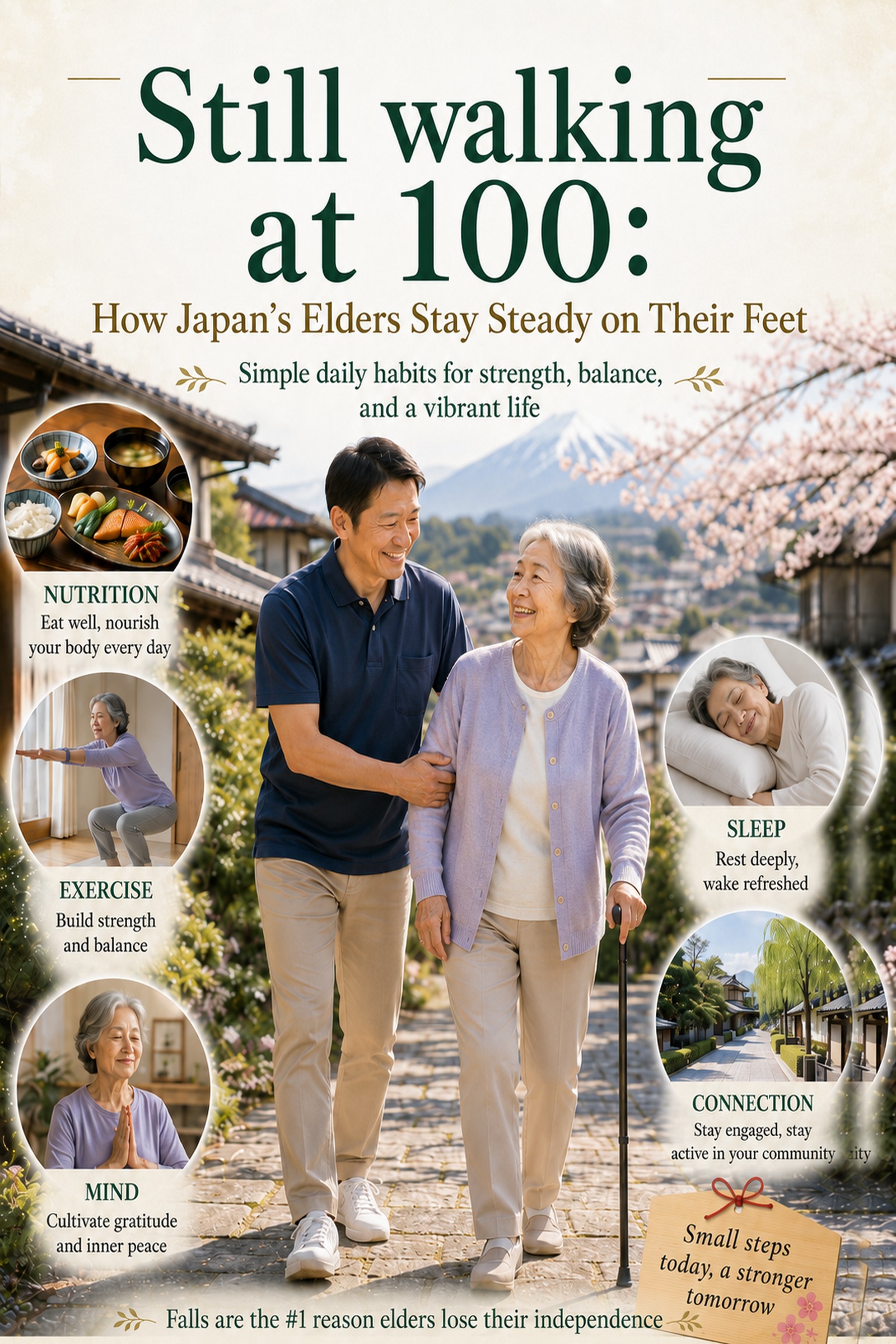
📖 New book by the author of this site
Still Walking at 100: How Japan’s Elders Stay Steady on Their Feet
Kindle $3.99 · free with Kindle Unlimited
Learn more
コメントを残す