The garden inside you, and the five foods that tend it
Why the gut microbiome changes in your seventies, five foods that already sit in most Japanese refrigerators, and the wellness-industry claims that mostly don’t hold up.
The gut, if you take the recent research seriously, is more like a second brain than we used to think. It runs on its own nervous system, communicates chemically with the actual brain, and hosts a colony of bacteria — the gut microbiome, the chōnai fōra in Japanese — that turns out to be closely involved in immune function, mood, and probably longevity itself. Roughly 70 percent of the human immune system lives in and around the gut. If your gut is doing well, so is your body’s ability to fight off the things that would otherwise put you in a hospital bed.
What surprises people is how much this changes with age. The gut colony of a healthy 70-year-old looks meaningfully different from that of a healthy 30-year-old, and not in a good way. Beneficial species decline. Less-friendly species take up the space. Motility slows. Nutrient absorption changes.
None of this is inevitable, and food is the single largest lever most people have to affect it.
Why the gut changes in the seventies
Several overlapping mechanisms.
Beneficial bacteria — bifidobacteria in particular — decline naturally with age. Nobody fully understands why. Diet, stress, antibiotic exposure over a lifetime, and general immune drift all contribute.
Less-friendly bacteria expand to fill the space. This shifts the whole ecosystem toward what microbiologists call dysbiosis — imbalance.
Gut motility slows. The muscles that push food through the digestive tract weaken along with the rest of the body’s muscles. Constipation and irregular stools become more common.
Appetite drops. Older adults eat less, and often less variety, which starves the microbiome of the diversity it needs.
Medications complicate everything. Antibiotics — even short courses — can rewire the microbiome in ways that take months to recover from. Proton pump inhibitors for reflux change gastric pH and affect what can survive downstream.
Five foods that actually help
These aren’t exotic. All five are already sitting in most Japanese refrigerators.
1. Miso
Fermented soybean paste. Contains live lactic-acid bacteria (in unpasteurized versions) and, more importantly, brings prebiotic fibers and bacterial metabolic products that feed the microbiome even after the miso itself has been cooked into soup.
The Japanese Public Health Center cohort has linked regular miso soup consumption with lower all-cause mortality. A bowl a day, ideally with wakame and tofu for additional benefit. Buy unpasteurized (nama miso) when you can, and add it to hot water at the end of cooking rather than boiling it — the bacteria are more likely to survive.
2. Natto
Fermented soybeans. Contains a specific bacterium — Bacillus subtilis var. natto — that survives stomach acid and reaches the intestine alive. This is unusual for probiotics; most don’t survive. Natto also delivers vitamin K2 for bone health and nattokinase, an enzyme with some cardiovascular research behind it.
One pack a day, most days. If the texture defeats you, mix into rice with soy sauce and green onion, or over a hot bowl of udon. Foreigners often find the smell easier than the texture.
3. Yogurt
Live cultures of lactobacillus and bifidobacteria. Different brands use different strains, and the strain that works well for one person’s gut may not for another’s. The practical implication: try one brand for two to three weeks and pay attention to how your gut feels. If it doesn’t help, switch. There’s no universal “best” yogurt.
Plain yogurt, not sweetened. Add honey or fruit if you want it sweeter. Sugar in commercial flavored yogurts largely offsets the benefits.
4. Burdock root (gobō)
A traditional Japanese root vegetable that’s an exceptional source of inulin — a soluble fiber that gut bacteria ferment into short-chain fatty acids. Those fatty acids are what the gut lining actually uses as fuel. Feeding your bacteria well is arguably more important than adding new ones.
Kinpira gobō (stir-fried burdock with sesame) or a bit added to miso soup. Two or three servings a week is more than enough.
5. Banana
A convenient double-duty food. Bananas contain both oligosaccharides (feed for beneficial bacteria) and, particularly in slightly under-ripe bananas, resistant starch — a fiber that behaves like prebiotic in the colon. Soft, easy to eat with older teeth, and cheap.
One banana a day, or half if you’re watching blood sugar. Slightly green-tinged rather than fully ripe if you have the choice.
The trap of the “gut cleanse”
The wellness industry has been aggressive about selling gut-related products for a decade, and much of what they sell is either ineffective or actively harmful. A few things to know.
Eating a lot of one thing all at once doesn’t help
The microbiome takes weeks to shift. Eating three tubs of yogurt in one afternoon just gives you gas. What matters is small, consistent intake over time.
Detox teas and cleanses
Aggressive laxatives disrupt the ecosystem you’re trying to rebuild. Skip them.
Expensive probiotics
The evidence for expensive probiotic supplements over food-based sources is thin. Fermented foods reach the gut with viable organisms and a food matrix that supports them. Isolated probiotic capsules often don’t.
Antibiotic overuse
Ask your physician whether an antibiotic is truly necessary each time one is offered. Many mild infections resolve without them. When you do need one, ask about probiotic support during the course.
Two habits that matter as much as the food
Fiber diversity
The microbiome thrives on variety. Twenty different plant foods per week is a widely-cited target from the American Gut Project data. That includes vegetables, fruits, grains, nuts, seeds, herbs. Not twenty new ones every week — just twenty that show up somewhere in your rotation. This turns out to be a better predictor of gut health than any single supplement.
Walking
Physical activity supports gut motility and appears to influence microbiome composition through mechanisms that aren’t fully understood. Sedentary older adults consistently show worse gut health markers than active ones. The 6,000 steps a day target from other articles on this site applies here too.
What to expect if you actually do this
Within two to four weeks, most people notice more regular stools and less bloating. By six to eight weeks, the immune benefits — fewer minor infections, faster recovery when something does hit — become noticeable. By six months, the changes settle into a new baseline that you don’t have to think about anymore.
None of this is dramatic. The gut is a slow tissue, and it responds to sustained input more than to any single dramatic intervention. Miso soup at breakfast, natto or yogurt each day, a bit of burdock in the rotation, and a banana in the fruit bowl. Add walking. Give it three months. The immune system you had at fifty is more available than you’d think.
References
- Katagiri R et al. Total fermented food intake and mortality in Japanese adults. European Journal of Nutrition, 2020;59:1005–1018.
- Kim et al. Bacillus subtilis var. natto — probiotic function and safety. Various Japanese microbiology reviews.
- American Gut Project data on plant diversity and microbiome health.
- Ohnishi Y et al. Miso soup consumption and cardiovascular mortality in Japanese cohorts. J Epidemiol, various years.
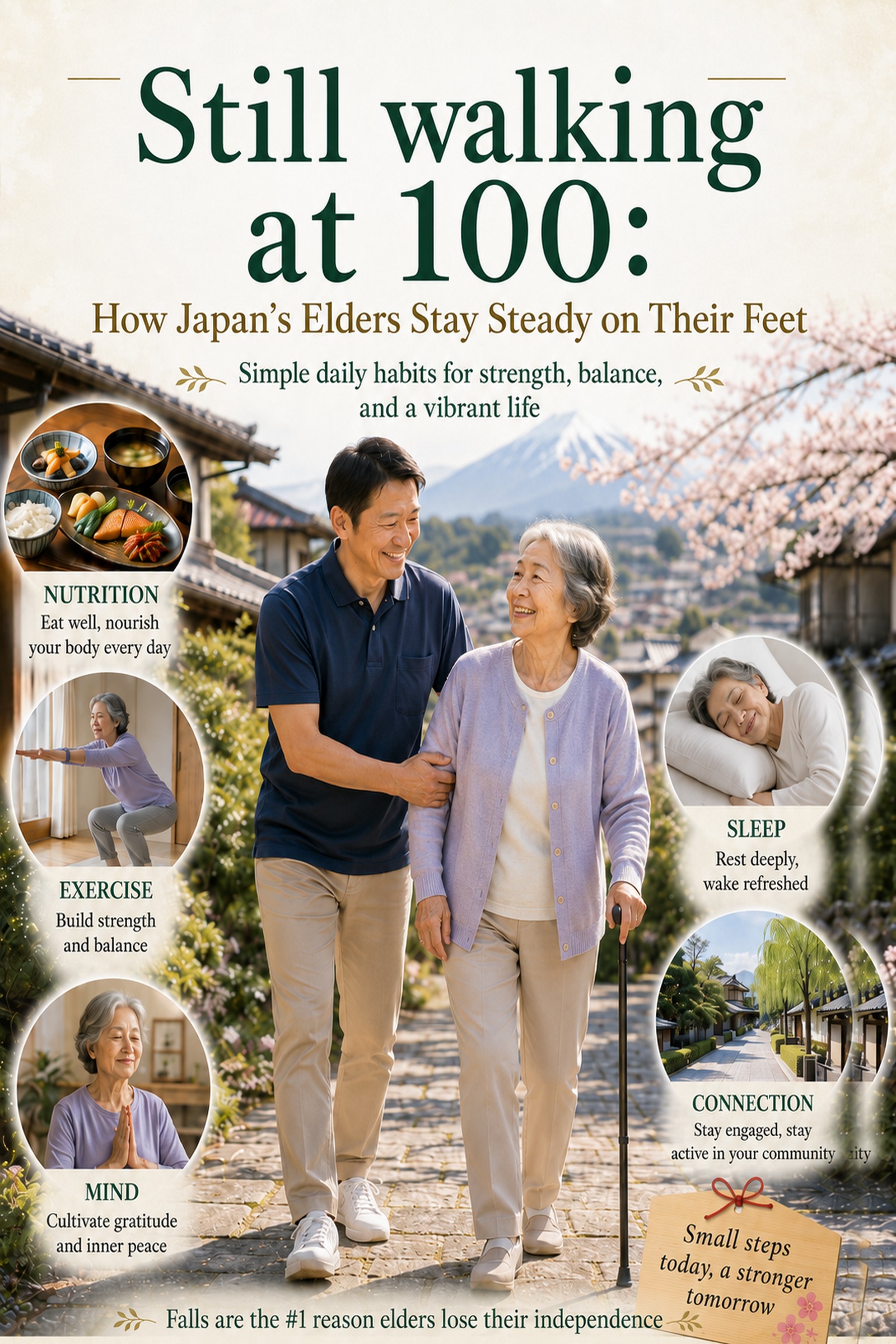
📖 New book by the author of this site
Still Walking at 100: How Japan’s Elders Stay Steady on Their Feet
Kindle $3.99 · free with Kindle Unlimited
Learn more
コメントを残す