Japan’s long-term care insurance, from application to service
The complete walkthrough. Certification, care manager, care plan, home services, day services, respite, residential facilities, community-based services, professionals, and money. Twenty key terms in one place.
Japan’s long-term care insurance system started in April 2000. Anyone 40 or older pays into it. When care becomes necessary, the system pays for most of it, and the household pays a fraction out of pocket. That’s the summary. The rest is the operational detail — which, honestly, is where most families get stuck, because the system has around twenty specific terms that mean specific things, and knowing them ahead of time is the difference between navigating the system smoothly and being lost when it matters.
What follows is a comprehensive walkthrough for people who suspect they, or a family member, are going to need this system in the next few years and want to understand how it actually works.
1. The overall shape
Municipalities run the insurance locally. Enrollees fall into two categories: Category 2 insured (ages 40 to 64) and Category 1 insured (65 and up). Category 1 members can access services for any care need. Category 2 members can access services only if their care need is caused by one of 16 specified conditions — stroke, early-onset dementia, rheumatoid arthritis, and so on.
To use services, you first need to be certified by the municipality. That’s the next section.
2. Care-need certification (yōkaigo nintei)
The person or their family applies at the municipal office. A trained assessor visits, usually at home, and evaluates the person on 74 items covering physical function, cognition, and daily-life ability. The applicant’s family physician provides a separate opinion letter. A computer produces an initial classification. A local Care Certification Review Committee makes the final decision. By law, the whole process takes about 30 days.
The seven levels
The result is one of seven categories:
- Support Level 1–2 (yōshien 1, 2): mild functional decline, expected to improve with preventive support. The Community General Support Center coordinates.
- Care Level 1–5 (yōkaigo 1 through 5): actual care needed, ranging from moderate assistance to nearly total dependence. A care manager at a home care support office coordinates.
Each level has a monthly service ceiling — the amount the insurance will pay for. Above the ceiling, you pay full cost. Below it, you pay the standard copay.
3. The care manager (kea manejā)
Once certified at Care Level 1 or above, you’re assigned or can choose a care manager. The care manager writes the initial care plan, coordinates with providers, arranges the service coordination meeting, and adjusts the plan as needs change.
The care manager is your single point of contact for the whole ongoing operation. Choose one you can work with. If the relationship doesn’t work, you can request a different one.
4. The care plan
The written document that lists what services the person receives, how often, from which providers, and what the goals are. It’s revised roughly every three months, or when the person’s condition changes materially.
5. Home-based services (zaitaku sābisu)
Visiting services
- Home helper — bathing, toileting, meals, and household support. Delivered at home by trained care workers.
- Visiting nurse — clinical care by a nurse. Wound care, medication management, IV support, end-of-life care.
- Visiting rehabilitation — physical, occupational, or speech therapy at home.
- Visiting bathing — a mobile bathing unit for people who can’t be safely bathed at home otherwise.
Day services
- Day service — half-day or full-day center-based care. Bath, meal, activities, gentle exercise. Also gives family caregivers a real break.
- Day rehabilitation — same but with more intensive therapy staff.
Short stays
- Short stay (life care) — a few days to two weeks in a residential facility for respite.
- Short stay (medical) — same, for people with medical care needs.
6. Residential facility services
- Special Elder Home (tokuyō). For people at Care Level 3 or higher (with narrow exceptions). Long-term or lifetime residence, often through end of life. Government-subsidized. Wait lists can be long.
- Elder Health Facility (rōken). Rehabilitation-focused, aimed at getting people back home. Typical stay is three to six months.
- Group home. Dementia-specific communal living for 5 to 9 residents. Requires a dementia diagnosis.
- Paid nursing home (yūryō rōjin hōmu). Private-sector residential care, wider range of prices and amenities.
7. Community-based services (chiiki mitchakugata)
Small-scale services designated and supervised by the municipality itself. Only residents of that municipality can use them.
- Small multifunctional in-home care — one contract covering day service, short stay, and home visits from a single provider.
- Nursing small multifunctional — the same, with visiting nurse added.
These are useful for people whose care needs vary week to week — the flexibility to shift among service types without paperwork is real.
8. The professionals
The kaigo fukushishi (Care Worker) is Japan’s national certification for direct-care staff. Around it work a team: nurses, PT/OT/ST therapists, dietitians, social workers, mental health social workers. Coordination happens at the service coordination meeting and, day to day, through the care record and the care manager.
9. Money
What you pay
Standard copay is 10 percent of the service cost. Higher-income users pay 20 or 30 percent. If your monthly out-of-pocket exceeds a ceiling, the excess is refunded through the High-Cost Long-Term Care Service Benefit. If you’re also incurring significant medical costs, the Combined Medical and LTC Ceiling further caps annual out-of-pocket.
Low-income users get additional relief on food and lodging costs at residential facilities.
What providers get paid
The kaigo hōshū — the LTC fee schedule — is set nationally and revised every three years. The 2024 revision, covered in another article, added a substantial staff-treatment component and a new productivity-improvement add-on for facilities using care robots and information systems.
10. The future direction: LIFE
LIFE — the Long-term care Information system For Evidence — is the national data system rolled out from 2021 onward. Participating facilities submit standardized data on residents’ functional status and outcomes; in return, they receive benchmarking feedback that guides improvement. A growing portion of the fee schedule requires LIFE participation. The direction is clear: over the next decade, evidence-based care will become the operational norm.
The typical trajectory, if you’re just starting
- Call the local Community General Support Center. Free consultation. They will explain your options and help with initial paperwork.
- Apply for care certification at the municipal office.
- Certification result arrives, typically within 30 days.
- Choose a care manager (or accept the recommended one). Develop the initial care plan.
- Service coordination meeting brings together the family, the care manager, and the providers.
- Services begin. Review at three-month intervals.
The single sentence to remember
If a parent seems to be declining, or if you or your spouse feels the first hints of things getting harder, don’t wait until a crisis. Pick up the phone and call the Community General Support Center for your municipality. Consultation is free. Care managers and other professionals will meet you where you are. Everything downstream — certification, services, facilities — flows from that first phone call.
The system is designed to help you. It’s genuinely one of the most sophisticated long-term care insurance schemes in the world. The tragedy of Japanese families is that so many of them don’t know it exists until they need it desperately. You now do. Bookmark the number.
References
- MHLW, Long-Term Care Insurance Act overview and current guidelines.
- MHLW, Certification Process for Long-Term Care Insurance Coverage.
- MHLW, 2024 Long-Term Care Fee Schedule Revision.
- MHLW, LIFE — Long-term care Information system For Evidence.
📖 New book by the author of this site
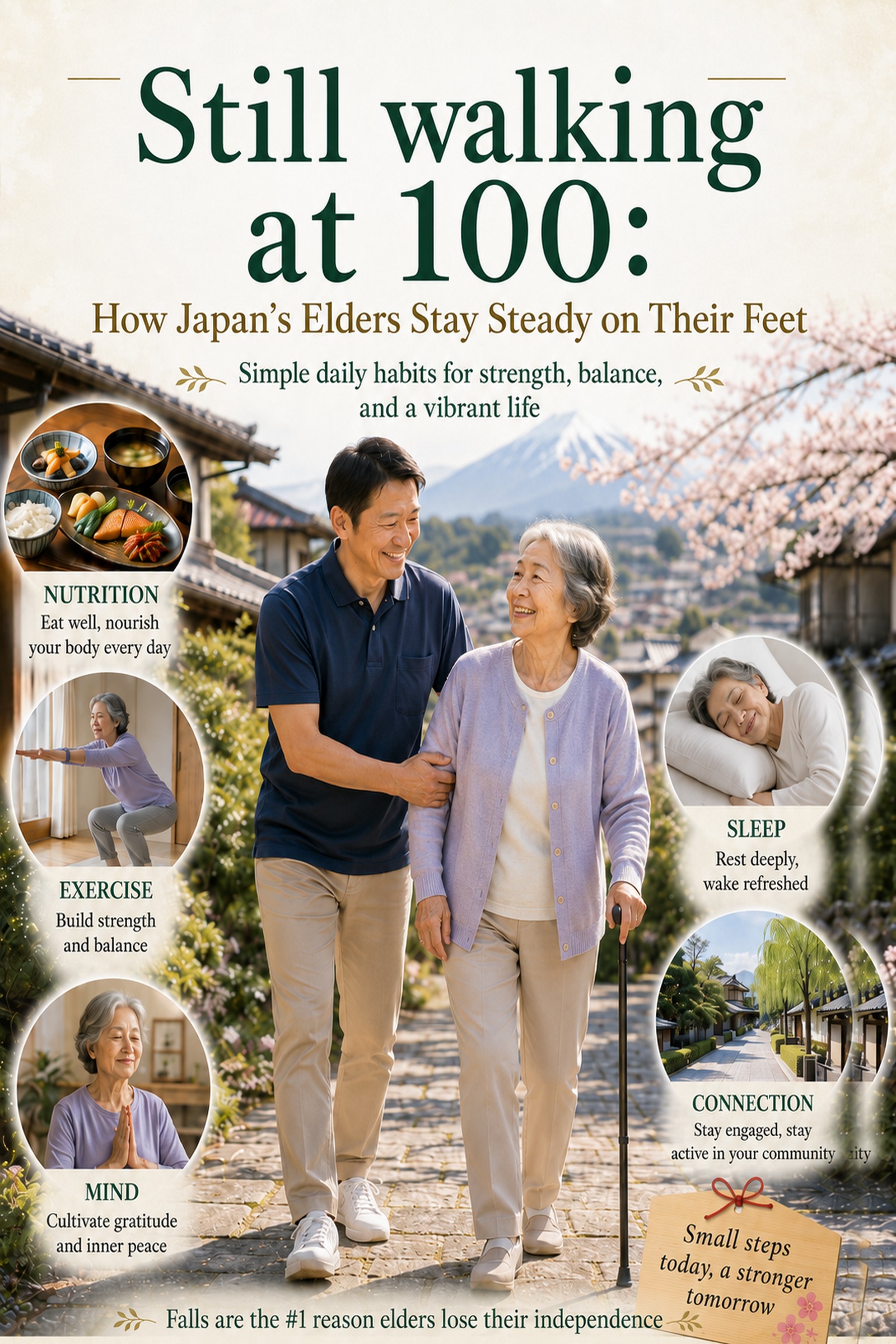
Still Walking at 100: How Japan’s Elders Stay Steady on Their Feet
Kindle $3.99 · free with Kindle Unlimited
Learn more
コメントを残す