One hundred small habits, and the twenty that actually matter
The full inventory of evidence-based habits, grouped into eight categories. Nobody does all of them. What the centenarians share is twenty to forty, kept consistently for decades. The five that would beat almost any subset.
Longevity research produces long lists. Most of them read like homework assignments. What follows is my attempt to reduce a hundred small evidence-based practices — the kind that appear in Blue Zones surveys, Japanese cohort studies, and geriatrics textbooks — down to something a person can actually work with. Not by cutting the content, but by grouping it into eight categories where you can pick the two or three items in each that fit your life.
Nobody does all hundred. The centenarians I’ve cared for over ten years each did somewhere between twenty and forty of them, consistently, for decades. The specific items varied. The pattern was consistent.
1. Food
Vegetables and fruit daily — five servings or more, associated with roughly 13 percent lower all-cause mortality. Whole grains over refined. Fish more often than red meat. Fermented foods every day. Legumes multiple times a week. Adequate protein (1.0 to 1.2 g/kg body weight for older adults). Enough calcium (roughly 700–800 mg/day for older adults) and vitamin D. Salt below 6 grams a day. Sugar minimized, particularly liquid sugar. Alcohol modest — one drink a day at most, and none is fine. Eat until 80 percent full. Chew thoroughly. Eat at a table, ideally with someone. Drink water throughout the day.
2. Movement
Aerobic activity at moderate intensity — the WHO target of 150 minutes a week, associated with 31 percent lower mortality. Strength training twice a week. Balance work regularly. Flexibility work as needed for stiff joints. Break up prolonged sitting every 30 to 60 minutes. Walk after meals. Take the stairs when reasonable. Garden if you can. Do something outdoors most days. Interval walking (the Shinshu protocol) if you can manage it. Find one form of movement you actually enjoy — the enjoyment is what makes it sustainable.
3. Sleep and rest
Seven to eight hours most nights, in a cool bedroom (around 20°C). Wake at the same time each morning. Get bright light on your face within an hour of waking. Limit napping to 20 minutes, before three in the afternoon. Bathe in warm — not hot — water an hour or two before bed. Wind-down routine, same order most nights. No screens the last hour before bed. Alcohol not in the hour before bed. Address snoring and daytime sleepiness with a doctor — sleep apnea is common and treatable.
4. Mind
Regular deliberate stress reduction — meditation, prayer, tai chi, reading, whatever works for you. Learn something new regularly, at whatever pace fits. Read paper books or the newspaper. Do something creative. Do something with your hands. Journal or write letters. Maintain a sense of purpose — ikigai, in Japanese — even a small one. Notice what you’re grateful for out loud. Practice patience with your own decline; don’t fight yourself. Seek help for depression or anxiety before it becomes disabling.
5. Social ties
Face-to-face contact at least once a week. Join a group of some kind — a hobby club, a community center, a temple, a choir. Volunteer, if you can. Maintain family connections, even the ones that require effort. Talk to your neighbors. Say hello to the shopkeepers. Reach out to friends before they reach out to you. Attend gatherings even when you don’t feel like it. If you live alone, arrange for someone to check on you daily. Consider a pet if you can care for one.
6. Medical care
Annual health check, always. Follow up on abnormal results. Establish a family doctor and stay with them for years. Vaccinate: annual flu, pneumococcal on schedule, RSV per current recommendations, shingles if you haven’t. Blood pressure monitored at home. Blood sugar tested annually. Cholesterol checked at intervals. Cancer screening on the recommended schedule. Dental checkup twice a year. Hearing checked at 65 and every year or two after. Eyes checked annually. Review your medication list every year with the goal of reducing what isn’t needed. Take medications on schedule. Consult before adding supplements.
7. Anti-aging basics that actually have evidence
Consistent moderate exercise (protects telomeres). Adequate omega-3 intake. Mediterranean-style diet or its Japanese cousin. Reasonable calorie moderation. Adequate sleep. Chronic stress management. Not smoking, at all. Sun protection to reduce UV damage over time. Care with heat exposure (protects mitochondrial function). Avoid highly processed and heavily glycated foods. Skepticism about anti-aging supplements — most don’t have the evidence the packaging suggests.
8. Accident and infection prevention
Fall-proof the house — remove trip hazards, add grab bars in the bathroom, motion-sensor lights in hallways. Non-slip mats in the bath. Sit down to put on shoes. Wear proper footwear indoors and out. Take your time on stairs. Hand hygiene as a habit. Mask when respiratory illness is in the community. Water and food safety basics. Drive less as reflexes slow — accept the transition when it comes. Keep an emergency contact list, medication list, and health information visible at home. Know your neighbors well enough that someone would notice if something happened.
The point of a list this long
The point is not to do all of it. It’s to recognize how many small levers you actually have. If your daily life includes twenty of the practices above, and you sustain them for a decade, you’ll be in the upper half of your age cohort in health outcomes. Add ten more, and you’ll be in the top quarter. Sustain it for two decades, and you’re in the territory the centenarians occupy.
The specific twenty don’t matter enormously. The consistency does. Pick the ones that fit your life without friction. Change one every few months if you want to expand. Ignore the ones that require a personality you don’t have.
The most powerful move in this whole list, if I had to choose one, is regular moderate movement. If I had to choose two, add adequate sleep. Three: social connection. Four: no smoking. Five: real food, not much of it, mostly plants and fish. If those five are in place, most of the rest matters at the margin.
You don’t need to be perfect. Nobody who made it to 100 was perfect. What they all were was consistent, at some middle-ground of practices that fit their lives, for a long time. That is the model. Everything else is decoration.
References
- Wang X et al. Fruit and vegetable consumption and mortality from all causes, cardiovascular disease, and cancer: systematic review and dose-response meta-analysis. BMJ, 2014.
- Ekelund U et al. Dose-response associations between accelerometer-assessed physical activity and mortality: systematic review and harmonised meta-analysis. BMJ, 2019.
- Holt-Lunstad J et al. Loneliness and social isolation as risk factors for mortality. Perspectives on Psychological Science, 2015.
- Estruch R et al. Primary prevention of cardiovascular disease with a Mediterranean diet (PREDIMED). NEJM, 2018.
- MHLW guidelines for older adults on nutrition, physical activity, and sleep.
📖 New book by the author of this site
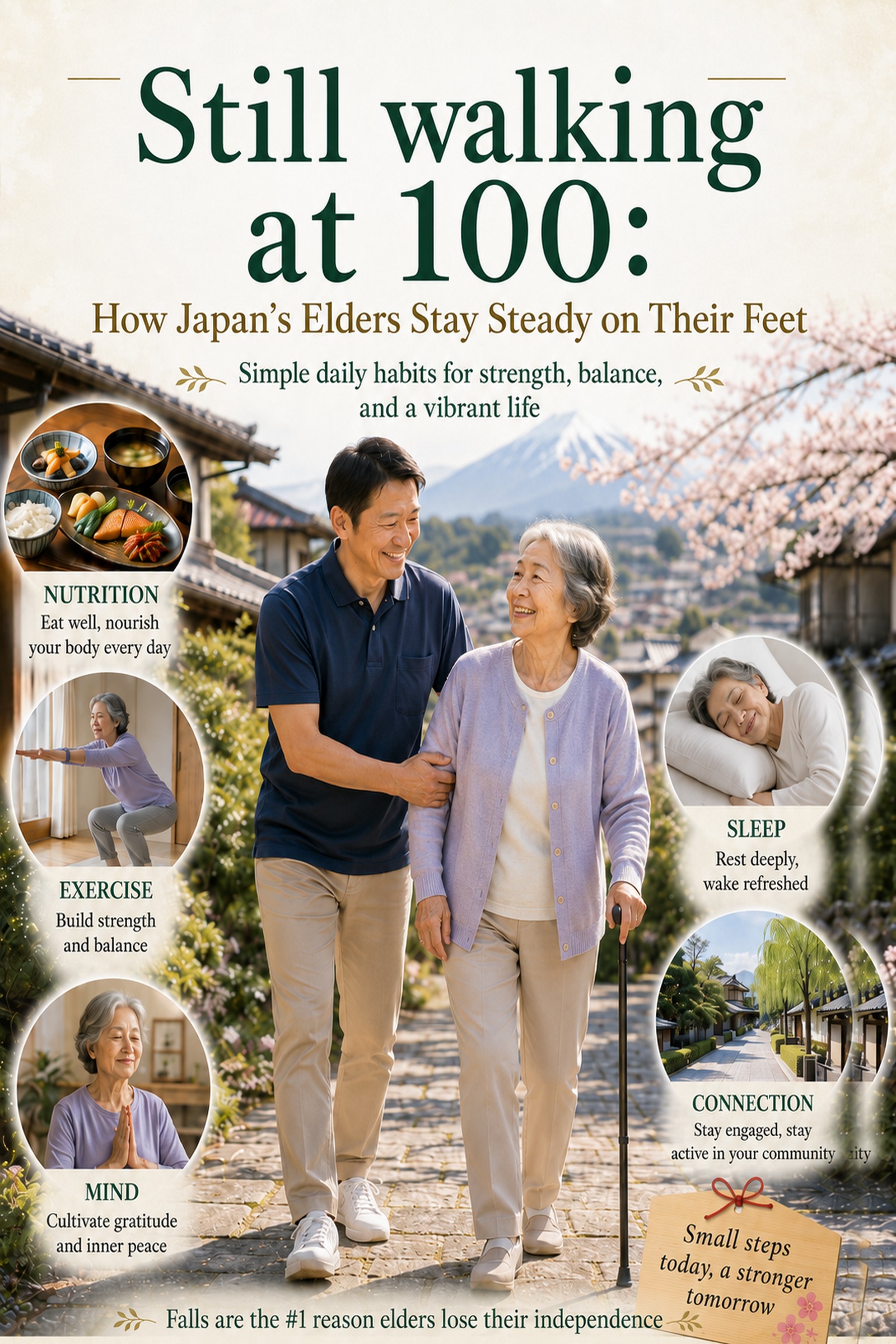
Still Walking at 100: How Japan’s Elders Stay Steady on Their Feet
Kindle $3.99 · free with Kindle Unlimited
Learn more
コメントを残す