Just walk more, only better
Form, dose, and pace. Why the 10,000-step target is marketing, why interval walking beats flat walking, and the two problems people run into once they take walking seriously.
The advice “just walk more” is not, strictly speaking, wrong. But it’s incomplete enough to be misleading. People take it up, walk for months, and either don’t see the benefits they were promised, or worse, develop knee and hip pain from unconsidered form. The problem isn’t walking. The problem is how it was framed.
What the research actually says about walking as an older-adult health intervention is more specific than the poster campaigns suggest. Here is the useful version.
Why walking works at all
Walking is aerobic exercise. Your heart rate rises, your muscles use oxygen, and your cardiovascular system gets trained. Because the intensity is modest and impact is low, walking is one of the very few forms of exercise that older adults can sustain for decades without injury. That’s the reason it dominates the longevity literature.
Regular walking, at the right intensity, is linked with:
- Lower blood pressure and reduced atherosclerosis progression.
- Maintenance of leg and hip muscle, and better bone density in the loaded areas.
- Increased blood flow to the brain, and associated reduction in dementia risk.
- Improved mood, through serotonin release and other mechanisms.
- Better postprandial glucose control, especially when the walk is after a meal.
None of these require a fancy program. All of them require walking done right.
Form
Most people walking casually are walking with a slightly stooped posture, short steps, arms dangling, and a foot strike that lands flat or on the ball of the foot. All of these dampen the exercise benefit and, over years, load the wrong joints.
What good form looks like, for an older adult:
- Head up, chin level. Look about ten meters ahead, not at your feet.
- Shoulders relaxed, chest slightly open.
- Arms bent at a comfortable angle, swinging naturally with the opposite leg.
- Stride slightly longer than what feels default — not enormous, but noticeably purposeful.
- Heel strike first, then rolling through to the ball of the foot, then pushing off the big toe. Not slamming — a smooth roll.
Nobody walks perfectly, and you shouldn’t obsess about the mechanics. But a mental check every few minutes — “am I standing tall, am I striking heel first” — over weeks trains the body to do it automatically.
How much
The 10,000-step target that spread worldwide in the 1990s came from a Japanese pedometer marketing campaign. It has no medical basis. The actual research suggests that in older adults, benefit rises steeply from about 4,000 steps a day up to about 7,000, and plateaus somewhere between 8,000 and 10,000. Above 10,000, you’re not getting much extra benefit for the additional effort.
MHLW’s target for adults 65 and older is 6,000 steps a day, which is where most of the benefit sits. If you’re currently averaging 3,000, adding 500 steps a week until you’re at 6,000 is a sensible pace.
How fast
Speed matters more than distance for cardiovascular training. The right intensity is what physiologists call moderate — hard enough that conversation is possible but singing isn’t. That corresponds to roughly 100 to 120 steps per minute, or about 4 to 5 km/h.
Slow walking has real benefits, especially for postprandial glucose. But if aerobic conditioning is the goal, some of your daily walking needs to be at the brisker pace.
Interval walking
The single most useful protocol I know of for older adults comes from Dr. Hiroshi Nose’s group at Shinshu University in Japan. The protocol is simple: three minutes at a comfortable pace, three minutes at a fast pace, repeated five times. Fifteen minutes of each intensity, thirty minutes total, three or four days a week.
In their trials, this produced significantly better improvements in strength, aerobic capacity, and blood pressure than continuous moderate walking of the same total duration. The mechanism seems to be that the brisker intervals recruit muscle fibers that flat walking doesn’t reach.
If you have a smartwatch or step-counter that tracks pace, use it. If not, count breaths: you should be breathing noticeably harder in the fast interval than the slow one.
When to walk
The single best window is 30 to 60 minutes after a meal. Walking then flattens the glucose spike substantially, and improves digestion. Ten to fifteen minutes is enough.
Early morning walks on an empty stomach are common in Japan, and there’s an aesthetic argument for them, but for older adults with low morning blood pressure they can be risky. Drink water and warm up briefly first.
Evening walks can interfere with sleep for some people if done vigorously less than two hours before bed. A gentle stroll is fine.
What to wear
Proper shoes are the single biggest gear decision. A walking shoe with cushioning at the heel, arch support, and a flexible sole matters more than most people realize. Replace them every 500 to 800 kilometers of use — the cushioning compresses and stops protecting joints.
Weather-appropriate clothing. In winter, layers that let you adjust as you warm up. In summer, breathable fabric and a hat.
Two problems people run into
The knee pain
If your knees are hurting after walks, three things to check: form (are you landing heavily?), shoes (are they worn out?), and dose (are you increasing distance too fast?). If the pain persists after adjusting these, see your doctor. Sometimes it’s early osteoarthritis, and there’s a good treatment path if caught before it worsens.
The boredom
Walking alone in the same neighborhood every day gets old. Solutions: podcasts, audiobooks, walking with a friend, varying the route, walking to a destination (a café, a park, a grocery store), or joining a walking group. Whichever solves the boredom for you is the right answer.
The point
The health data on walking is remarkably consistent across cultures and study populations. Thirty minutes a day, at moderate pace, most days of the week, moves nearly every relevant biomarker in the right direction. It’s one of the few pieces of health advice that survives every round of scientific revision.
Do it slightly better than “just walk more” and you’ll get most of what a person can plausibly expect from a single simple habit.
References
- Nemoto K, Gen-no H, Masuki S, Okazaki K, Nose H. Effects of high-intensity interval walking training on physical fitness and blood pressure in middle-aged and older people. Mayo Clin Proc, 2007.
- Nakanojo Study — Aoyagi Y et al., Tokyo Metropolitan Institute of Gerontology.
- MHLW, Physical Activity Reference for Health Promotion 2023.
- Paluch AE et al. Daily steps and all-cause mortality: a meta-analysis of 15 cohort studies. Lancet Public Health, 2022.
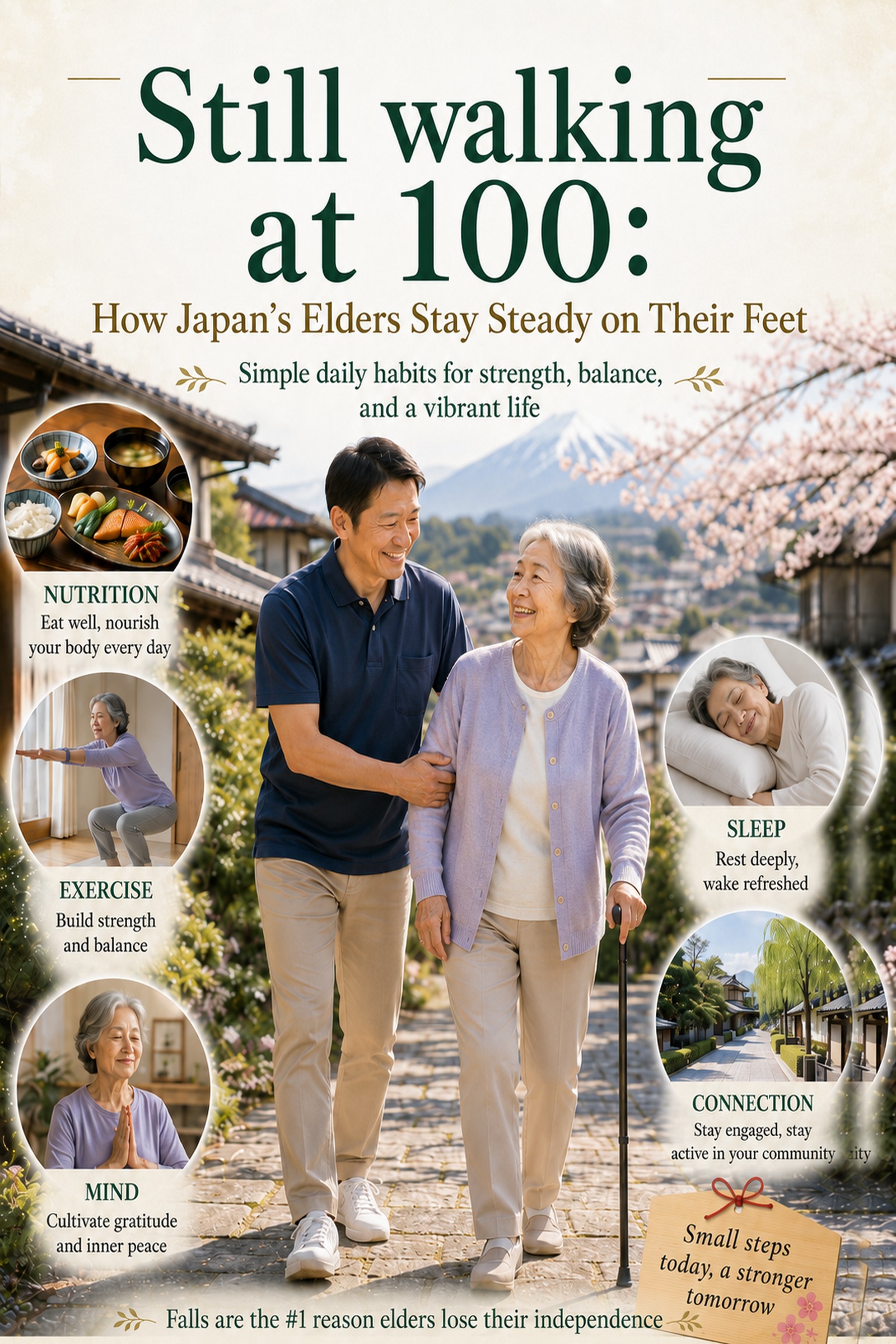
📖 New book by the author of this site
Still Walking at 100: How Japan’s Elders Stay Steady on Their Feet
Kindle $3.99 · free with Kindle Unlimited
Learn more
コメントを残す