The reason for the two o’clock slump
What blood-sugar spikes are, why they wreck your afternoon (and eventually your pancreas), and the almost-free rearrangement of your plate that flattens them.
You know the feeling. The plates are cleared, you sit back for a minute, and something in the middle of your chest starts to sink. Ten minutes later you’re fighting to keep your eyes open. Sometimes people call it a food coma and laugh about it. It’s actually a real thing. It has a name. And most days, it doesn’t need to happen.
What’s going on is a blood-sugar spike. The technical term for it in Japanese medicine is ketto-chi supaiku. On a graph of blood glucose over time, a normal meal produces a small hill. A spike produces a mountain, followed by a valley. The valley is why you feel drowsy. The mountain, repeated over years, is what damages the pancreas, the blood vessels, and eventually the memory.
What’s happening under the hood
Carbohydrates in your food break down into glucose, which enters the bloodstream. The pancreas releases insulin, which signals the body to move glucose out of the blood and into cells for storage. Eat carbs slowly and moderately, and this process is smooth. Eat a big bowl of white rice all at once, and glucose floods in fast, insulin fires hard, and blood sugar overshoots on the way down. That trough is where the drowsiness lives.
Repeat this five times a week for a decade and the pancreas gets tired. Diabetes starts as a slow drift, not a diagnosis. And the newer research suggests glucose swings also damage blood vessel walls and correlate with cognitive decline. So it isn’t just an afternoon inconvenience. It matters over the long run.
Signs you might be doing this to yourself
- Sharp drowsiness 30 minutes to an hour after eating.
- Sudden hunger a couple of hours later, even though you ate plenty.
- Difficulty concentrating in the afternoon.
- Craving something sweet right after a meal.
Any of these regularly? Worth adjusting how you eat.
The single easiest fix: order
The Japanese have a name for this too — veggie first. The idea is that fiber, eaten before carbs, coats the inside of the intestine and slows the absorption of the sugar that comes next. It’s not fancy. It’s not expensive. It’s just a rearrangement.
A Japanese meal in this order: the vegetables in the miso soup first, then the fish or the simmered dish, then the rice. A Western meal: salad first, then the protein, then the bread or potato. Same food, same total calories. Different curve.
A few things that help alongside
- Chew, and slow down. Aim for at least 20 minutes per meal. Fast eating alone produces a sharper spike. Thirty chews per bite is the old grandmother’s rule; it holds up.
- A splash of vinegar before meals. A teaspoon in a glass of water, or on a salad, blunts the blood-sugar response by a small but real amount. This one has actual studies behind it.
- A short walk after eating. Fifteen minutes on foot, starting 15 to 30 minutes after the meal, uses up circulating glucose in the working muscles. It changes the graph considerably. You don’t need to move fast, just move.
- Don’t let the pantry get empty for too long. Extreme hunger produces a sharper spike when you finally do eat. Three regular meals is a real thing, and skipping breakfast is more expensive than it looks.
- Swap some of the white for the brown. Barley rice for white rice sometimes. Whole-grain bread when you can. Not everything, not every meal. Just some of the time.
Two ways this idea gets misapplied
One is thinking that if you eat vegetables first, you can eat as much of anything else as you want. The fiber cushion helps, but it doesn’t make a mountain of rice invisible. Portion still matters. This isn’t a cheat code.
The other is going overboard on the opposite direction and cutting carbohydrates too aggressively. Extreme low-carb eating causes its own set of problems, and older adults in particular need enough carbohydrate and enough protein to hold onto muscle. The Japanese diet, in its classic ichijū-sansai shape, gets the balance about right on its own.
The order costs nothing to change. Try it for a week and check the two o’clock energy dip. If it’s smaller, you’ve found something worth keeping.
References
- Imai S et al. Effect of eating vegetables before carbohydrates on glucose excursions in Japanese patients with type 2 diabetes. J Clin Biochem Nutr, 2014;54(1):7–11.
- Johnston CS et al. Vinegar improves insulin sensitivity to a high-carbohydrate meal. Diabetes Care, 2004;27(1):281–282.
- MHLW, Dietary Reference Intakes for Japanese, 2025 edition.
- General references on postprandial glycemic response and cognitive/vascular outcomes.
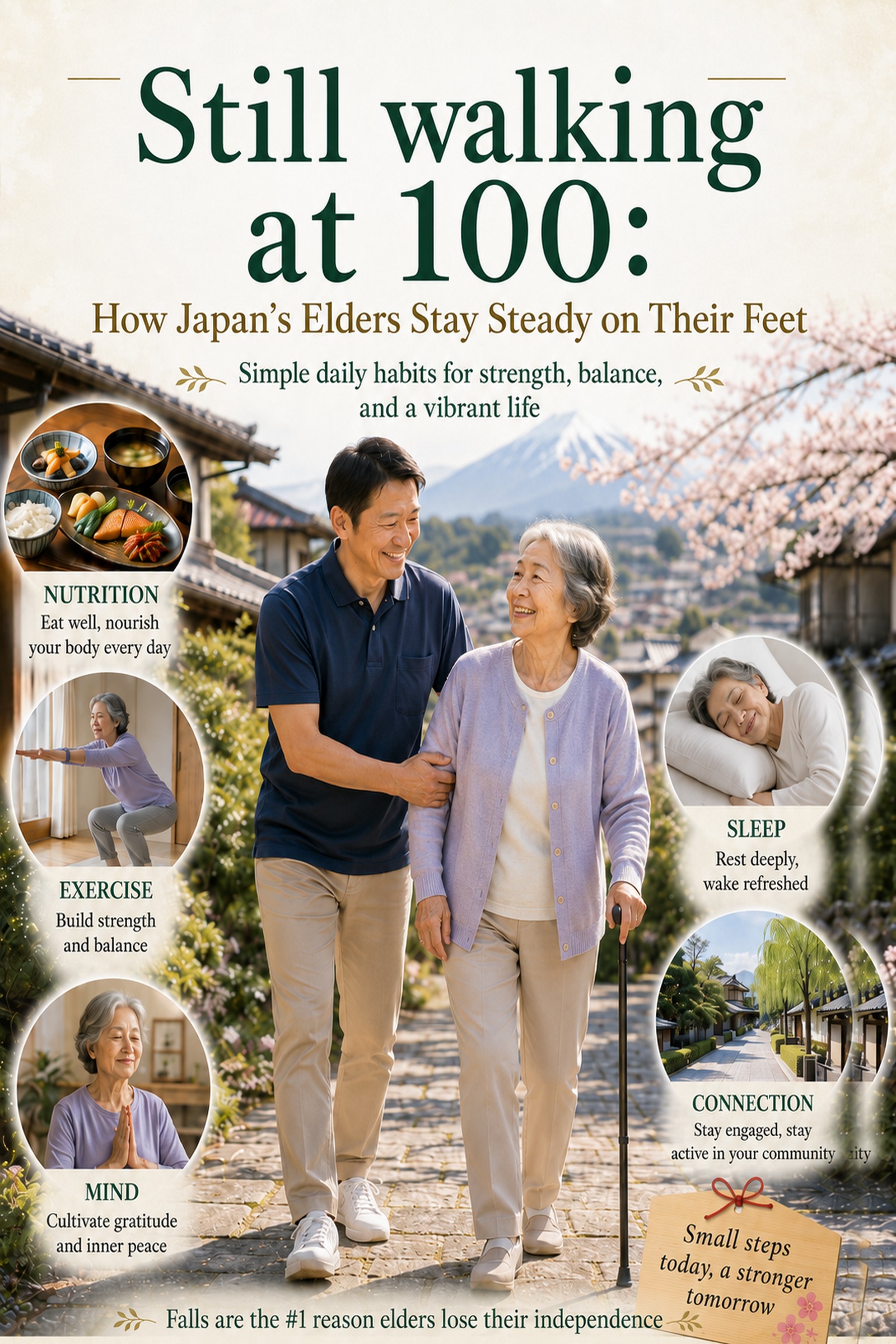
📖 New book by the author of this site
Still Walking at 100: How Japan’s Elders Stay Steady on Their Feet
Kindle $3.99 · free with Kindle Unlimited
Learn more
コメントを残す