Five things on the breakfast tables of centenarians
Natto. Miso soup. An egg. A piece of fruit. Green tea. What older people who are still walking themselves out the door tend to eat first each morning, and the two habits that matter more than any single food.
Ask someone who is a hundred and fully mobile what they had for breakfast, and it is almost never anything invented after 1960. The pattern that emerges, whether the person lives in Okinawa, or Nagano, or Sardinia, or the Nicoya Peninsula of Costa Rica, is remarkably consistent. Small portions. A soup or a broth. Something fermented. Something with fiber. And an actual sit-down at the table, not standing at the counter with an app open.
Here are five things that show up repeatedly on the tables of people who have made it to a hundred in good shape. Not a magic list. Just what actually works, and what I’ve come to trust over ten years of watching people eat.
1. Natto
The sticky fermented soybeans that many foreigners cannot get near, and that Japanese people who make it past ninety are eating three or four times a week. Natto is heavy on high-quality protein and vitamin K2, which supports both bone and blood-vessel health. It also contains nattokinase, an enzyme that dissolves fibrin clots. Multiple Japanese studies have linked regular natto consumption with lower stroke and heart-attack mortality.
If the smell defeats you, start with one of the milder brands and mix it into rice or over toast (which is more common than tourists realize). One small pack, three or four mornings a week, does most of the work.
2. Miso soup
A bowl of miso soup does more than warm the stomach. Miso, being fermented soybean paste, brings the isoflavones from the beans and the melanoidin from the fermentation itself, plus the bacteria the fermentation produces. Add wakame seaweed for iodine and minerals. Add tofu for protein. Add a slice of green onion. Fifteen minutes of prep the first time, three minutes every morning after that.
An old worry — that the sodium in miso would raise blood pressure — has not held up well in large Japanese cohorts. Frequent miso soup drinkers do not show the expected hypertension penalty. It seems the potassium in the soybeans and the seaweed offsets the sodium load.
3. An egg
The complete protein food, still. Choline for the nervous system. Leucine for muscle synthesis. Vitamin A, vitamin D, B12. The old fear of egg cholesterol was mostly walked back once the epidemiology came in — for healthy adults, one or two eggs a day is not the problem people used to think it was. Boil them, fry them, scramble them, or drop one raw over hot rice, which is how many Japanese elders take theirs.
4. A piece of fruit
Almost always. In Japan, often a banana. In Okinawa, papaya. In Sardinia, a small apple or an orange. The specific fruit matters less than the presence of something fresh at the start of the day. Potassium for blood pressure, fiber for the gut, quick clean carbohydrate to end the overnight fast without the crash of pastry.
Bananas in particular pair well for older adults: soft on the teeth, carrying fructo-oligosaccharides that feed gut bacteria, and providing enough carbohydrate to get somebody out the door without a spike.
5. Green tea
The last thing on the tray. Ohsaki Study data linked drinking more than five cups a day with lower all-cause mortality in Japanese adults over eleven years of follow-up. The catechins are one story. The theanine, which promotes calm alertness, is another. And there is the simple fact that green tea makes you drink water, which older bodies chronically fail to do.
Warm, not hot enough to scald. Loose leaf if you can be bothered. A bag is fine if you can’t.
Two things that quietly matter more than any single food
The first is hara hachi bu. Stop at eighty percent full. This is a habit, not a rule, and it takes about a month to learn if you weren’t raised with it. But calorie restriction of even a modest amount, sustained over decades, is one of the more robust interventions in the aging literature.
The second is who is at the table. People who eat breakfast with someone else — a spouse, a family member, a neighbor stopping in — live longer than people who eat every meal alone. The mechanism is probably the same one at work in the loneliness data. Food is social. It always has been.
None of this requires new equipment, or a subscription, or a delivery. It requires walking into your kitchen, opening the fridge, and choosing five ordinary things.
References
- Nagata C et al. Dietary soybean and fermented soybean intake and mortality in Japan. Nutrition, 2017.
- Kokubo Y et al. Association of dietary intake of soy, beans, and isoflavones with risk of cerebral and myocardial infarctions in Japanese populations. Circulation, 2007.
- Suzuki M et al. Ohsaki Study on green tea consumption and mortality. JAMA, 2006;296:1255–1265.
- Katagiri R et al. Total fermented food intake and mortality in Japanese adults. European Journal of Nutrition, 2020;59:1005–1018.
📖 New book by the author of this site
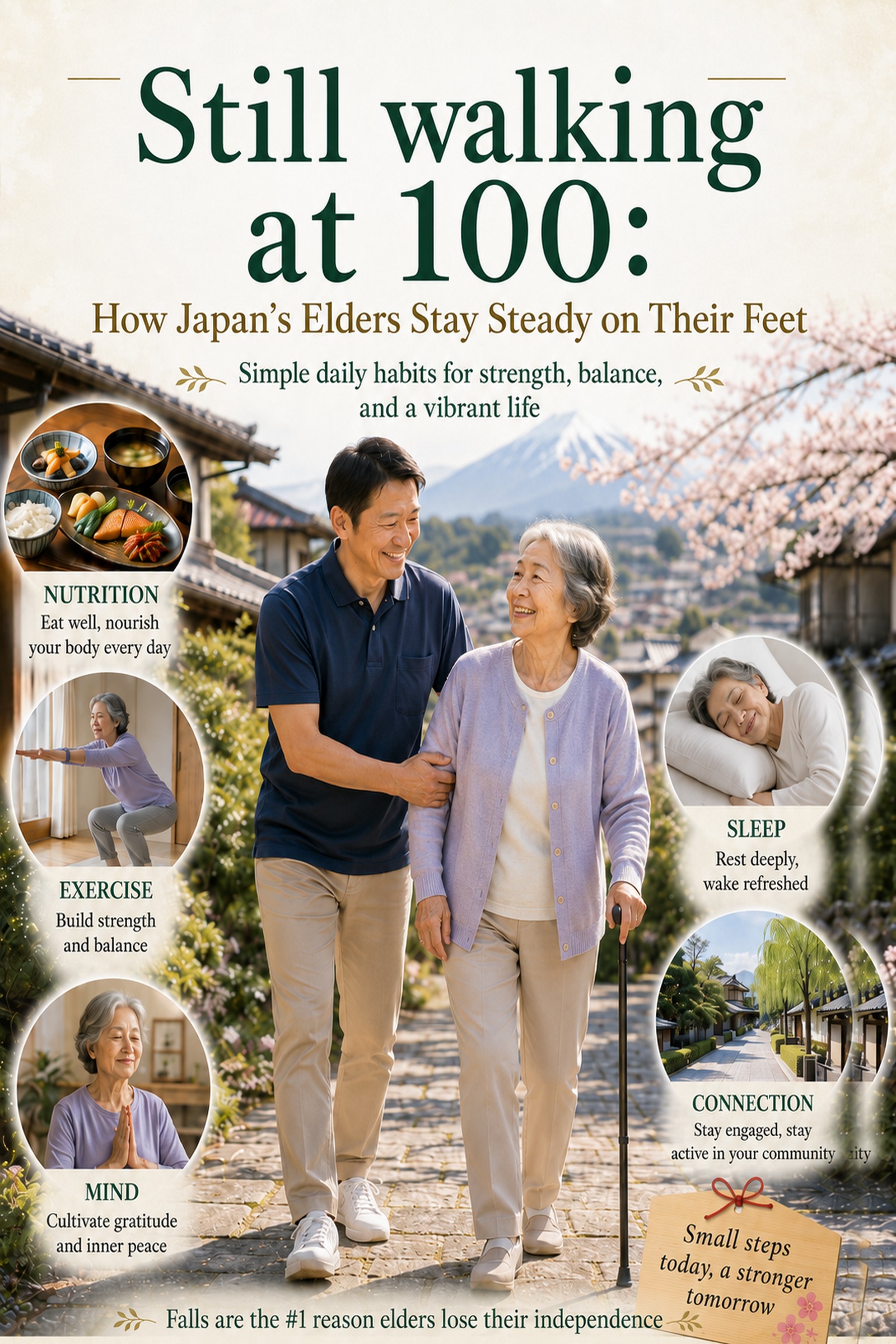
Still Walking at 100: How Japan’s Elders Stay Steady on Their Feet
Kindle $3.99 · free with Kindle Unlimited
Learn more
コメントを残す