What’s actually happening in an aging body
The seven cellular mechanisms that drive aging, what changes in the body past 70, and — the useful part — how much of it still responds to your choices at that age.
Aging isn’t one thing. It’s a bundle of biological processes that happen at different rates in different tissues, driven by mechanisms that we’re only now beginning to understand. What follows is a summary of what geriatric medicine, cell biology, and longevity research have converged on over the last twenty years, aimed at a reader who wants to know what’s actually happening in their body and — this matters — what still responds to their choices at seventy.
None of this is deterministic. The mechanisms below describe averages. Individual variation is enormous. Two eighty-year-olds sitting in the same day-care room can have biological ages a decade apart. What follows is the kind of information you can use to nudge yourself toward the healthier end of that spread.
Aging vs. getting older
These are different words. Getting older (karei) is the passage of time — the calendar advancing. Aging (rōka) is the accumulation of functional decline that tends to correlate with time but doesn’t have to. You can be 82 chronologically and 68 biologically. You can also be 55 chronologically and 70 biologically. What separates the two is what happens at the cellular level.
Seven mechanisms driving aging
Geroscience — the biology of aging — has settled on roughly a dozen “hallmarks of aging” that appear repeatedly across species. Here are the seven most useful for a person over 70 to understand.
1. Cellular senescence
Cells stop dividing after a limited number of replications. Senescent cells accumulate with age. Worse, they secrete inflammatory signals — collectively called SASP, the senescence-associated secretory phenotype — that damage surrounding tissue and promote further aging locally.
Drugs called senolytics that selectively kill senescent cells are in clinical trials. For now, exercise, adequate sleep, and dietary restraint appear to slow senescent cell accumulation modestly.
2. Telomere shortening
Chromosomes have protective caps called telomeres. Each cell division shortens them. When telomeres get short enough, the cell stops dividing. An enzyme called telomerase can rebuild telomeres, but adult somatic cells express it at low levels.
Chronic stress, poor sleep, and inflammation appear to accelerate telomere shortening. Exercise and meditation appear to slow it. The effect sizes are modest but consistent across studies.
3. Oxidative stress
The oxygen you breathe is used for energy production, and the process generates reactive oxygen species — free radicals — as byproducts. In small amounts, these are useful signals. In excess, they damage DNA, proteins, and lipids.
Antioxidants from food (vitamin C, E, polyphenols) neutralize excess radicals. Moderate exercise raises endogenous antioxidant capacity, which is one of the mechanisms behind exercise’s longevity effect. Excessive exercise, without recovery, can actually raise oxidative stress — one reason moderate consistent activity beats occasional heroic efforts.
4. Glycation
When excess sugar in the blood reacts non-enzymatically with proteins, it produces advanced glycation end products (AGEs). AGEs stiffen tissues — arteries, skin, tendons — and accumulate over decades. The Japanese term is tōka, and the metaphor used in Japanese medical writing is that the body slowly rusts and browns from within.
The lever: keeping blood sugar in a normal range for as much of the day as possible. Post-meal walks, fiber before starch, less sugar in drinks. Also, cooking method matters — heavily browned or grilled foods deliver AGEs directly. Steaming, simmering, and gentle roasting produce fewer.
5. Hormonal drift
Growth hormone declines with age. So do sex hormones — estrogen in women postmenopause, testosterone in men gradually across decades. These declines contribute to muscle loss, bone loss, and metabolic changes.
Exercise, particularly strength training, partially preserves these systems. Hormone replacement therapy is available for some indications and — in Japanese guidelines as elsewhere — is a case-by-case decision with a specialist.
6. Chronic low-grade inflammation (“silent inflammation”)
Older bodies run with a slightly elevated baseline of inflammatory markers. This phenomenon is called inflammaging. It correlates with cardiovascular disease, dementia, sarcopenia, and cancer risk.
Visceral fat contributes. So does elevated blood sugar. So does poor sleep. The interventions overlap with everything else on this list: movement, weight management if applicable, and an anti-inflammatory diet (omega-3s, vegetables, minimal processed food).
7. Mitochondrial decline
Mitochondria — the cellular power plants — decline in number and function with age. The result is reduced energy production, more oxidative byproducts, and increased fatigue.
Exercise is the main lever here. Both aerobic exercise and, especially, interval training stimulate mitochondrial biogenesis — the creation of new mitochondria. Some observational research suggests intermittent fasting or time-restricted eating may also support mitochondrial health, though the evidence in humans is still preliminary.
What ages, and how, past 70
Muscle and bone
Sarcopenia accelerates in the seventies. Muscle mass falls 1 to 2 percent per year without intervention. Bone remodeling shifts toward loss. This is the mechanism behind the fall-and-fracture cascade that is the single biggest threat to independence in the eighties and nineties.
Cardiovascular
Arteries lose elasticity. Heart muscle contractile force declines. Exercise capacity drops. Blood pressure typically rises. Managing hypertension aggressively past 70 is one of the single highest-yield medical interventions available.
Brain and nervous system
Neurons decline modestly in most brain regions. Certain areas — hippocampus, prefrontal cortex — are more vulnerable. Cognitive changes are common, but not the same as dementia. Ordinary age-related change is much milder than the disease process of Alzheimer’s or vascular dementia.
Immune
Immunosenescence sets in. Response to vaccines is smaller. Infections that a younger body would shrug off become serious. This is why annual flu vaccines, pneumococcal vaccines, and RSV vaccines matter so much more past 65.
Endocrine
Hormones drift. Thyroid function can subtly decline. Insulin sensitivity drops. Screening for these is worth doing at intervals.
Skin
Collagen falls. Elasticity declines. Turnover slows. Sun exposure across a lifetime shows itself in the seventies and eighties. Skin cancer surveillance becomes worth the annual dermatology visit.
What responds to intervention, and roughly how much
Muscle mass — highly responsive, at any age. Strength training and adequate protein can rebuild 5 to 15 percent of muscle in six months even in octogenarians.
Cardiovascular fitness — responsive. Aerobic conditioning improves at 80 much as it does at 40, in relative terms.
Bone density — modestly responsive to weight-bearing exercise, calcium, vitamin D, and pharmaceuticals when indicated.
Cognitive function — the components tied to blood flow, sleep, and social engagement are responsive. The components tied to specific disease process (Alzheimer’s) are less responsive but not zero.
Metabolic markers — very responsive. Blood pressure, blood sugar, cholesterol all move meaningfully with lifestyle change.
What’s not responsive: chronological age itself. Certain accumulated tissue damage. Some genetic predispositions.
The practical implication
The mechanisms above sound intimidating. In practice, what moves them is not intimidating at all.
- Move regularly, at moderate intensity. Aerobic plus strength.
- Sleep 7 to 8 hours. Protect it.
- Eat plants, fish, fermented foods; minimize sugar and processed food.
- Manage stress deliberately, in whatever form works for you.
- Stay socially connected.
- Keep up with medical screenings and vaccinations.
- Give yourself modest positive challenges — learning, purpose, meaningful work of some kind.
These are boring. They’re also, in aggregate, more powerful than anything the anti-aging industry sells. Every one of the seven mechanisms above responds to some combination of them, and none require a monthly subscription or an unproven supplement.
The biology is complex. The behavior isn’t.
References
- López-Otín C et al. The Hallmarks of Aging. Cell, 2013;153:1194–1217, and its 2023 update.
- Kennedy BK et al. Geroscience: linking aging to chronic disease. Cell, 2014.
- Franceschi C, Campisi J. Chronic inflammation (inflammaging) and its potential contribution to age-associated diseases. J Gerontol A Biol Sci Med Sci, 2014.
- Ma S et al. Caloric restriction reprograms the single-cell transcriptional landscape of Rattus norvegicus aging. Cell, 2020.
- Various reviews on senescence, mitochondrial biology, and telomere biology.
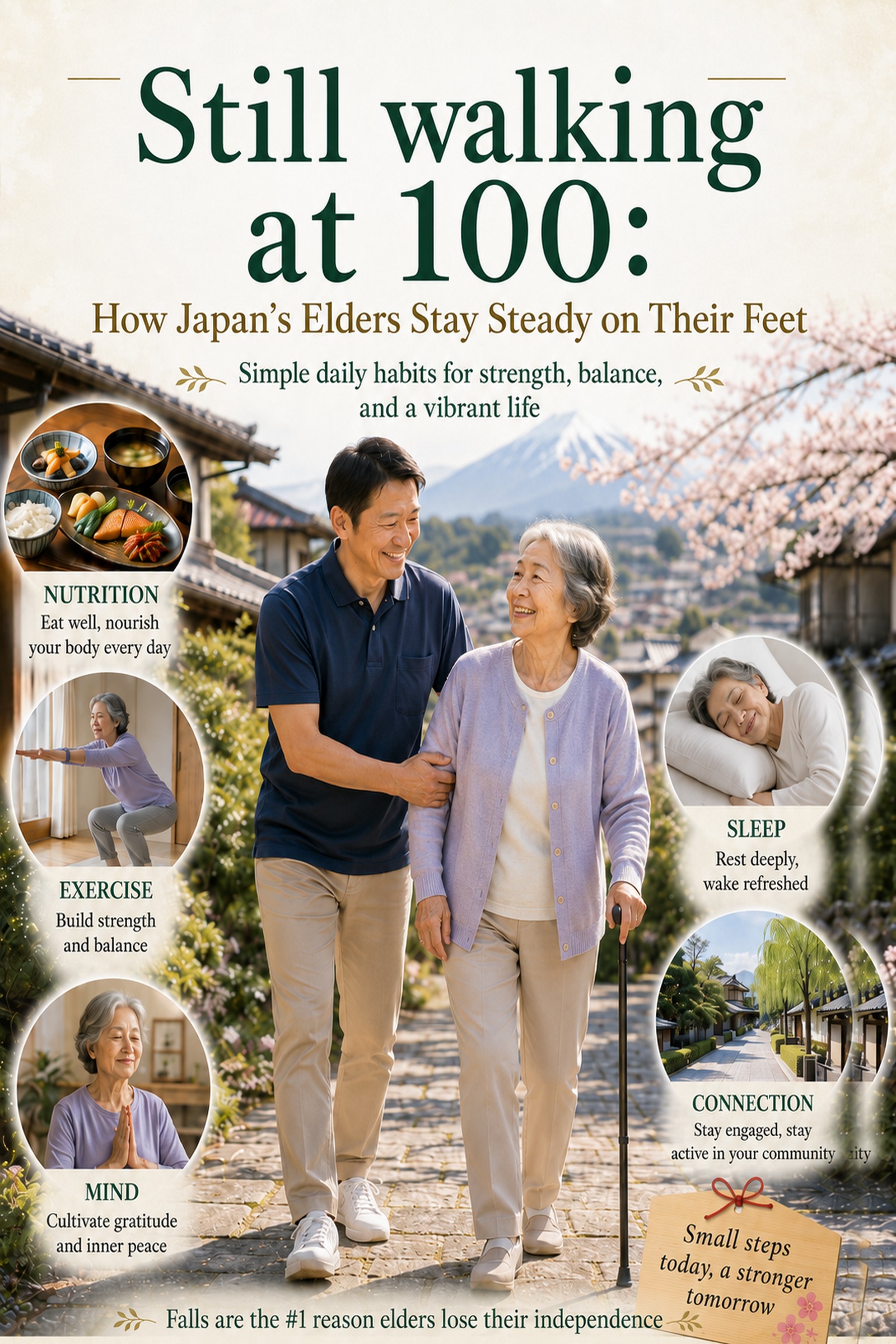
📖 New book by the author of this site
Still Walking at 100: How Japan’s Elders Stay Steady on Their Feet
Kindle $3.99 · free with Kindle Unlimited
Learn more
コメントを残す