A body that won’t fall — five movements in five minutes
Muscle can be grown at any age. Chair squats, heel raises, single-leg stands, wall push-ups, towel rows — plus a walk that suits you.
“I’ve been catching my toes on things lately.” Have you noticed the same? Most of the time, the culprit is the quiet loss of muscle in the legs and hips. The good news is that muscle can be grown at any age. Here is how to build a body that doesn’t fall — starting at five minutes a day, in your own living room.
Why the legs weaken in the seventies
Left untended, muscle mass declines by roughly 1% per year. The lower body loses the fastest. When the thighs and glutes fade, stride length shortens — and a small ridge in the sidewalk becomes a trip hazard.
This muscle-loss state is called sarcopenia. A step earlier, when both body and mind begin to weaken, is called frailty. Both are reversible with movement and nutrition. There is no reason to resign yourself to either.
Falls are the single biggest trigger for becoming bed-bound. That is why “saving up” leg and hip strength has to be a daily habit. No equipment needed — your own body weight is enough. Strength matters less than consistency.
Five movements, five minutes
Try the following five movements, starting at a comfortable number of repetitions. Keep a hand on a table or wall — safety first.
- 1. Chair squats. Sit-almost-then-stand. Stop just before your bottom touches the chair.
- 2. Heel raises. Rise onto your toes and lower slowly, hand on a wall for balance.
- 3. Single-leg stands. Balance on one leg for 30 seconds, then the other.
- 4. Wall push-ups. Palms on the wall, chest to the wall, then push away.
- 5. Towel rows. Hold a towel taut between both hands and pull outward at chest level.
Together they take roughly five minutes. Two to three times a week is enough to see real gains.
The key is to move slowly, without momentum. For the squat, picture the moment just before you’d sit into a chair. Push your hips back, keep your weight over your heels, and align your knees with your toes — never let them collapse inward. Keep breathing; don’t hold your breath. If half the repetitions feel like plenty, do half. A slightly underwhelming start is the right start. Add more as you go.
A walking target: 8,000 steps, with 20 minutes of brisk walking
Adding walking to strength work multiplies the benefit. The long-running Nakanojo Study, which tracked older adults in Nakanojo Town, Gunma Prefecture for years, offers a widely-cited target: an average of 8,000 steps a day, including 20 minutes of brisk walking (Dr. Yukitoshi Aoyagi, Tokyo Metropolitan Institute of Gerontology).
At this level, benefits reported include reduced risk of high blood pressure, diabetes, osteoporosis, and dementia. No need to hit the target every single day — some days it will rain. Aim for the weekly total; that is enough.
A checklist for keeping the habit
- ☐ Make daily steps visible with a step counter or your phone.
- ☐ “Brisk” means fast enough that conversation is a little breathless.
- ☐ Anchor the strength routine to something you already do — tooth-brushing, morning coffee.
- ☐ Rest if you feel pain. Do not push through.
- ☐ Look back at the week, and put a mark on the days you managed it.
A quiet closing note
The legs and hips can be rebuilt at any age. Five minutes of five movements, plus a walk that suits you — this is the short road to a body that doesn’t fall. Start with what you can do today.
At 72, I still do heel raises and single-leg stands every morning. Pairing them with tooth-brushing, oddly enough, is what makes them stick. Small habits, kept long, work the hardest.
If you have any concern about your health, please consult your physician before beginning a new exercise routine.
References
- Nakanojo Study — Aoyagi Y., Tokyo Metropolitan Institute of Gerontology. Long-running observational study of walking, brisk walking, and health outcomes in older adults.
- MHLW / WHO physical activity guidelines for older adults.
📖 New book by the author of this site
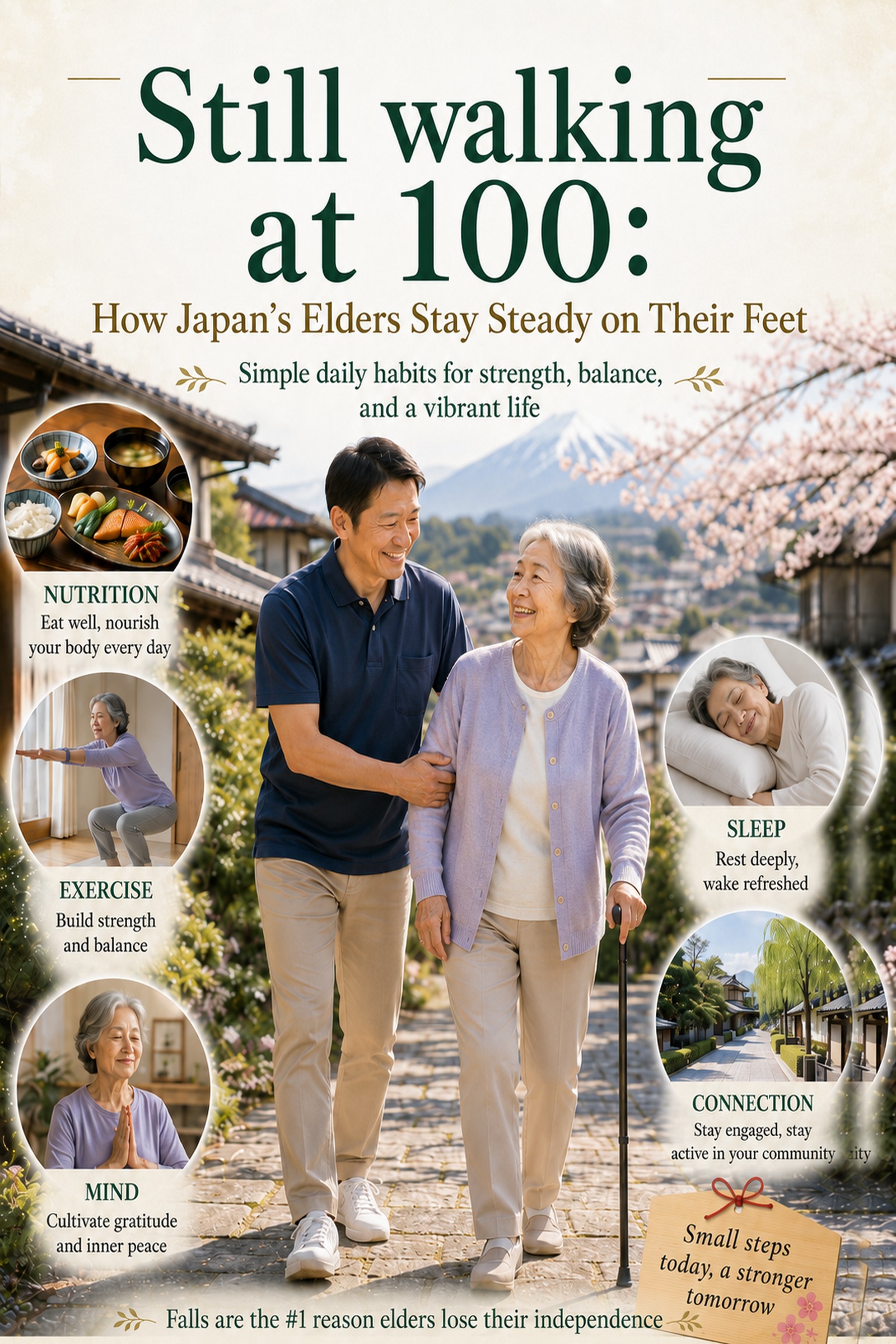
Still Walking at 100: How Japan’s Elders Stay Steady on Their Feet
Kindle $3.99 · free with Kindle Unlimited
Learn more
コメントを残す