Movement is the medicine after a fall
Why the first three months matter most, three stages of recovery, and what gets missed — medications, bone density, the house, and the fear itself.
The first fall is bad enough. The second is worse. Not just because the body has less to give the second time, but because the person has now internalized the fear of falling, and fear of falling is itself an independent predictor of the next fall. It shortens stride. It tightens muscles. It keeps people inside. All of which weakens the very systems that would have caught them.
What breaks this cycle is rehab, done at the right pace, starting sooner than most people think.
Why an older body falls, and why the fracture is worse
Muscle mass has been quietly declining for decades. Bone density has been declining alongside it. When these two collide with the everyday sidewalk, the same trip that would have produced a scrape at twenty produces a hip fracture at seventy-eight.
Balance and reaction time have both slowed. Nerve conduction is a little longer. Sensation in the soles of the feet has dulled. The inner ear, which handles balance, is not quite what it used to be. Vision may have narrowed. All of these compound each other. And after a fall, if the person spends weeks not moving, all of them get worse — sometimes dramatically — inside a month.
That last part is the key. Immobility is what turns a survivable fall into the beginning of a decline. Rehab exists to prevent that transition.
Three stages of recovery, in plain language
Stage 1: Calm the pain and inflammation, but don’t lie still
Right after the fall — or right after surgery, if it required surgery — you follow the physician’s rest orders. That’s non-negotiable. But rest does not mean immobile. Ankle rolls in bed. Hand and arm circles. Deep breathing. Small isometric squeezes of the leg muscles even when you can’t move the joint. All of these keep circulation moving and prevent the fastest kind of atrophy.
This matters more than it sounds. A week of complete bed rest costs older adults 10 to 20 percent of the strength in their legs. That much loss can be the difference between walking out of the hospital independently and needing a walker for the rest of your life.
Stage 2: Rebuild sitting and standing
As the pain settles, the work shifts. Chair exercises. Lifting one leg at a time while sitting. Standing up slowly from a chair, holding onto something stable. Ten times. Rest. Ten again.
Don’t be embarrassed to use a walker or grab a rail. Fighting for independence too early leads to fresh falls. Assistive devices at this stage are not a defeat. They are a bridge.
Stage 3: Balance, strength, and confidence
Once basic mobility is back, the actual fall-prevention training starts. This is where evidence-based programs make a real difference. In Cochrane’s systematic reviews, exercise programs specifically targeting strength and balance reduced falls in community-dwelling older adults by 20 to 25 percent.
The specific movements that come up over and over:
- Heel raises. Feet flat, up on the toes, down. Ten to twenty repetitions, holding a rail or counter for support.
- Single-leg stands. Start with ten seconds each side, work up to a minute. Always near a wall for safety.
- Shallow squats. As if sitting down toward a chair, without touching. Keep knees behind toes. Focus on control, not depth.
- Walking. Simple, and the most transferable to real life. Start with short distances and build.
Tai chi belongs on the list too. The specific movement patterns — sustained single-leg loading, controlled weight shifting — happen to be exactly what balance rehab tries to teach. If your community has a class, it’s worth trying.
What often gets missed
The medications review
Falls sometimes have a chemical cause. Sleeping pills. Blood pressure medications that drop pressure too far when you stand up. Anticholinergic drugs that fog cognition. If you fell and you’re on several medications, ask your family doctor for a review specifically focused on fall risk. Some medications can be tapered or timed differently.
Bone density
If you broke something, you should have your bone density measured. Osteoporosis treatment can substantially reduce the risk of the next fracture. This gets overlooked in the rush to rehabilitate the injury itself.
The house
The place where you fell is usually still exactly as it was. Loose rugs. Poor lighting on the stairs. No grab bar in the bathroom. Fixing these is boring, and it works better than any medication I know of.
The fear itself
Post-fall syndrome — the psychological aftermath — is real, and it responds to the same graded exposure that anxiety does in other contexts. A physical therapist or a supervised program can rebuild confidence at the same rate they rebuild muscle. Don’t accept “I can’t go outside anymore” as an outcome.
When to see somebody
Any fall from standing height in an adult over 65 deserves a medical visit, even if nothing seems broken. Head impacts especially — even without obvious symptoms — can produce delayed bleeding, and a scan the same day can catch it. If a second fall follows the first within a few months, that is a signal for a comprehensive geriatric assessment.
The good news
The trajectory after a fall is not predetermined. Most people who commit to structured rehab in the first three months do return to close to their prior function. The people who don’t return usually didn’t get, or didn’t accept, the rehab. If you or a family member has fallen recently, the first three months are the window that matters most. Ask the physician what they can prescribe by way of rehab, whether physical therapy is covered, and whether your local municipality runs a fall-prevention class. The answer to all three is usually yes.
Movement is the medicine here. Fear is the disease. Both are treatable.
References
- Sherrington C et al. Exercise for preventing falls in older people living in the community. Cochrane Database Syst Rev, 2019.
- Kortebein P et al. Effect of 10 days of bed rest on skeletal muscle in healthy older adults. JAMA, 2007.
- Panel on Prevention of Falls in Older Persons, American Geriatrics Society and British Geriatrics Society. Summary of the Updated Clinical Practice Guideline for Prevention of Falls in Older Persons.
- MHLW guidelines on fall prevention and post-fall assessment.
📖 New book by the author of this site
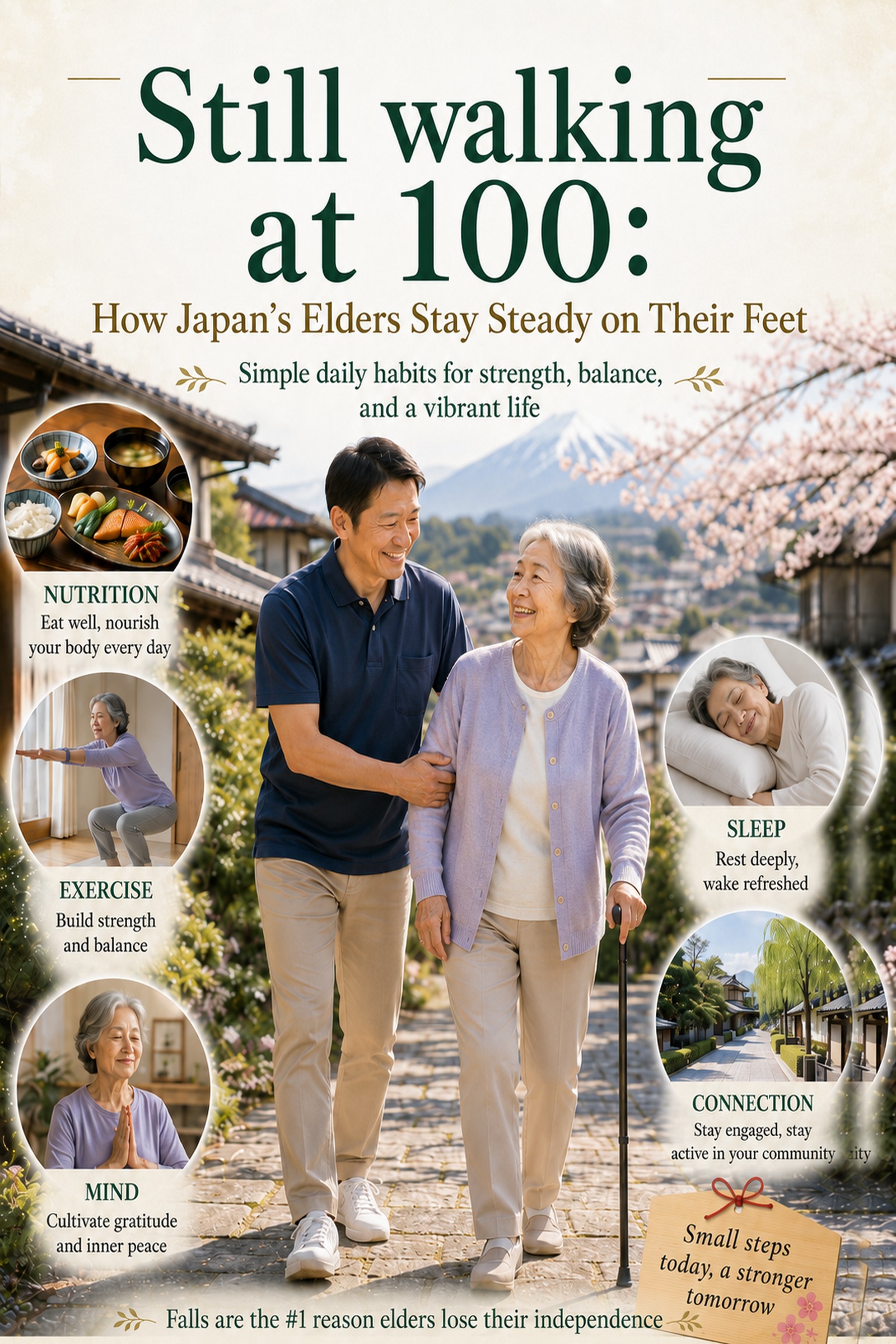
Still Walking at 100: How Japan’s Elders Stay Steady on Their Feet
Kindle $3.99 · free with Kindle Unlimited
Learn more
コメントを残す