You can still build muscle at eighty
Why muscle disappears if you don’t feed it, why the older body is worse at using protein, how much you actually need, and the distribution rule that makes it work.
The idea that you can’t build muscle in your eighties is one of those things everyone believes and nobody has actually checked. The research says otherwise. Frail eighty-year-olds put through resistance training programs gain measurable muscle mass, and they gain it fast — sometimes as quickly as people in their forties. The gains matter. They translate directly into better walking, better balance, fewer falls.
The reason this doesn’t happen more often is that most eighty-year-olds are eating in a way that starves the process. Not deliberately. Just because habits laid down at fifty stop working at eighty, and nobody flagged the change.
Why muscle disappears if you don’t feed it
Sarcopenia — the technical term for age-related muscle loss — is not gentle. Left alone, muscle mass falls about 1 percent per year from your thirties. By your seventies it’s speeding up, and by eighty the average person has lost 30 to 40 percent of the muscle they had at twenty. This is what makes chairs harder to get out of and stairs harder to climb. It’s also what makes a fall much more likely to end in a fracture.
Frailty — fureiru in Japanese care language — is the gray zone in between healthy and dependent. It has a physical component (weak muscle, slow gait), a mental component (low mood, cognitive fog), and a social component (staying home). Sarcopenia is the engine of the physical part. Fix the muscle and a lot of the rest moves.
The older body is worse at using protein
This is the piece most people don’t know. Give a young adult 20 grams of protein and their muscles synthesize what they need. Give an eighty-year-old the same 20 grams and the synthesis response is smaller — sometimes markedly smaller. This is called anabolic resistance. What it means, practically, is that older adults need more protein than the standard adult recommendation suggests, not less.
How much, actually
Japan’s MHLW recommendation for adults 65 and up is 60 grams per day for men, 50 for women. Those numbers are the floor. Every geriatric medicine organization I’m aware of — the International Association of Gerontology and Geriatrics, the European PROT-AGE working group, the Japanese Society of Geriatrics — recommends 1.0 to 1.2 grams per kilogram of body weight per day for healthy older adults, and 1.2 to 1.5 grams per kilogram for people who are frail, ill, or actively trying to build muscle.
Translating: a 50-kilo woman aiming for muscle maintenance needs 60 to 75 grams a day. A 65-kilo man aiming to reverse frailty needs 80 to 100. These are targets you can hit with real food if you plan for them.
What foods carry it
Animal-based proteins have the more complete amino acid profile, especially the leucine that muscle synthesis needs. Plant proteins are lower in leucine but bring fiber, phytonutrients, and cardiovascular benefits. A mixture is ideal.
- Chicken breast and thigh, fish (salmon, mackerel, tuna), eggs, dairy (yogurt, cheese, milk).
- Tofu, natto, soy milk, edamame, chickpeas and other beans.
Rough numbers, so you can plan: 100 grams of chicken breast is about 22 grams of protein. One egg is about 6. One 200 gram cup of yogurt is 8 to 15 depending on brand (Greek is higher). One pack of natto is about 8. One 150 gram serving of tofu is about 10.
The distribution rule
This matters as much as the total. Older adults often skip or minimize breakfast, eat a light lunch, and eat most of their protein at dinner. Muscle synthesis doesn’t work that way. The mechanism responds to a bolus of about 20 to 30 grams of protein per meal, and additional protein above that in a single sitting is largely wasted. Piling everything into dinner doesn’t build muscle. Three meals with 20 to 30 grams each does.
What this means in practice: breakfast has to have protein. A Japanese breakfast with rice, miso soup, and pickles is charming but leaves you short. Add an egg, natto, yogurt, or fish and it works.
Some specifics I recommend at our center
An egg or natto with breakfast. Fish at lunch if possible, or tofu in generous amounts. A meat, fish, or tofu main at dinner. A cup of Greek yogurt or a small block of cheese in the afternoon if the day is short on protein.
For people who genuinely cannot eat that much whole food, a whey or soy protein shake once a day can bridge the gap. The stigma against protein powder for older adults is misplaced — it is just concentrated food. Milk-based whey is well tolerated by most people who don’t have full lactose intolerance.
The other half
Protein alone won’t build muscle. It requires a stimulus. Any of the following works: chair-stands, wall push-ups, heel raises, resistance bands, aqua walking, tai chi with weight shifting, or actual weights if a person is comfortable with them. Two or three sessions a week of ten to twenty minutes is enough to trigger the response. Combine that with adequate protein at every meal and the muscles will build. Even at eighty. Even at ninety. This is not myth — it’s just biology paying attention.
What breaks the trajectory is inertia. If you’re eighty and reading this, and you have been eating light and moving less than you used to, adding one egg to breakfast and doing ten chair-stands after lunch is a start. Two weeks in you’ll notice the chair is a little easier. Six months in, real change. This has been demonstrated in trials repeatedly. The body is more forgiving than most eighty-year-olds have been told.
References
- Bauer J et al. Evidence-based recommendations for optimal dietary protein intake in older people: a position paper from the PROT-AGE Study Group. J Am Med Dir Assoc, 2013.
- Volpi E et al. Is the optimal level of protein intake for older adults greater than the recommended dietary allowance? J Gerontol A Biol Sci Med Sci, 2013.
- Fiatarone MA et al. Exercise training and nutritional supplementation for physical frailty in very elderly people. NEJM, 1994.
- MHLW, Dietary Reference Intakes for Japanese, 2025 edition.
📖 New book by the author of this site
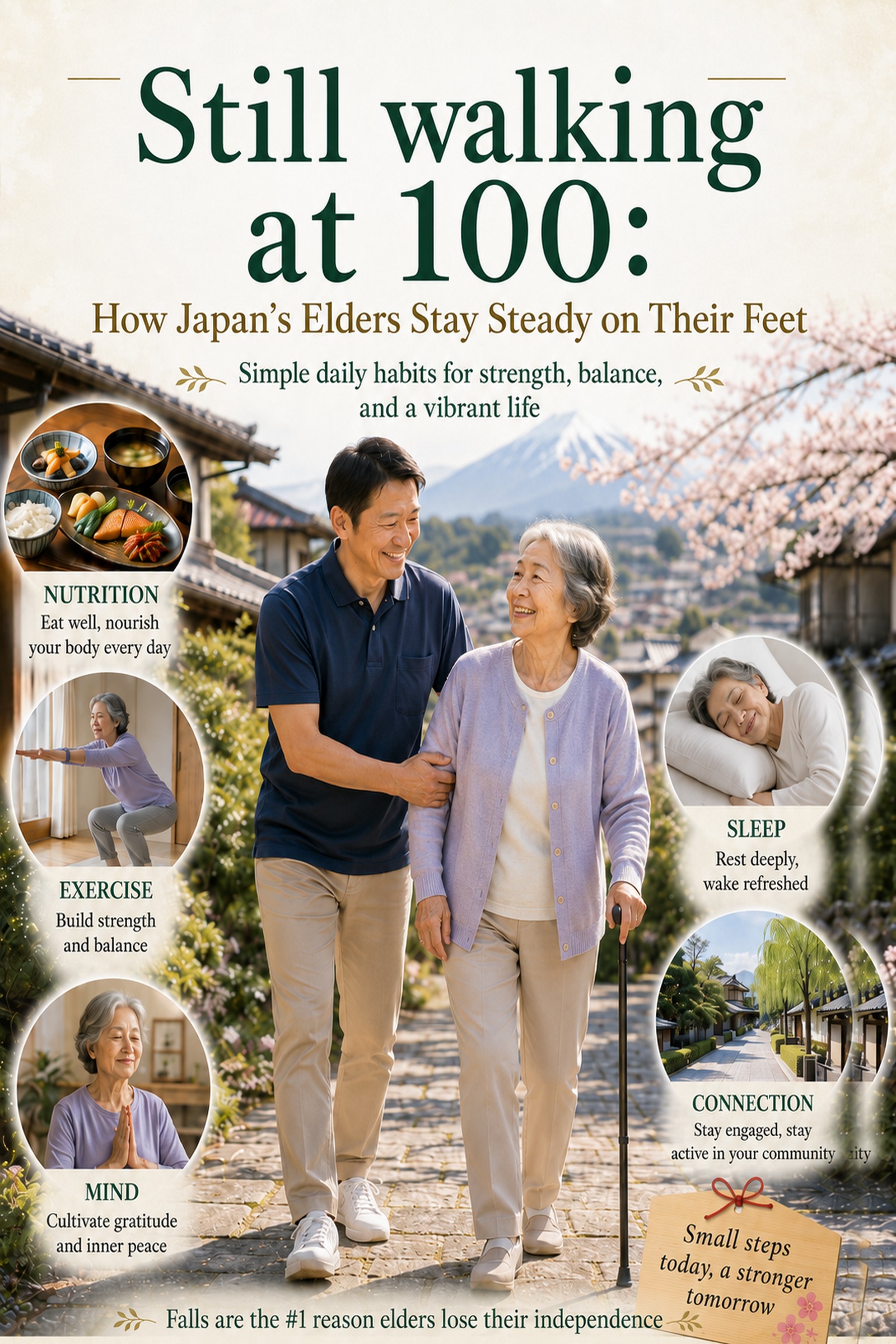
Still Walking at 100: How Japan’s Elders Stay Steady on Their Feet
Kindle $3.99 · free with Kindle Unlimited
Learn more
コメントを残す